Analytics
-
 Ranchbot’s sensors use satellite technology to monitor tank levels, trends and operation, enabling customers to check water data on their phones or computers in real time.
 -
A new partnership is endowing state transportation departments in Ohio and Pennsylvania with multiple data points through which to better understand traffic on their roadways and corridors.
-
The new data analytics platform brings health, public safety and service information into a single view, in an effort to help officials guide substance abuse prevention efforts and resource decisions.


More Stories
-
The Smart Cities Connect Conference and Expo in Washington, D.C., opened its in-person gathering today after a two-year hiatus that sent the regular meeting to a video-conferencing posture.
-
The Big Sky Fire Department, located in the community of Big Sky, Mont., is testing out Pano's AI wildfire detection technology to help increase fire visibility and improve response efforts.
-
A new study focusing on police conduct reviewed 500 body camera videos from the Newtown Police Department in Connecticut. The researcher, a former officer, says body cams are "essential."
-
As detailed in a 116-page newly released strategy, city officials in New York City are looking to proactively build ethics into machine learning and AI usage as the technologies become vital pieces of everyday life.
-
Plus, the Federal Communications Commission has committed an additional $1 billion to the Emergency Connectivity Fund program, California looks to improve its procurement processes for tech services, and more.
-
Various experts have suggested that states should spend opioid settlement dollars on data-focused technology. So far, states have been quiet on possible tech investments, citing other steps that must be taken first.
-
To address racial and ethnic disparities, Massachusetts lawmakers are considering reducing Massachusetts Bay Transportation Authority fares and shoring up Internet infrastructure with American Rescue Plan Act funds.
-
Carol Burroughs, the assistant director of North Carolina's Data Division, has been tapped to serve as the state's interim chief data officer. She replaces former CDO John Correllus, who retired Oct. 1.
-
Incompatibility between new software and old meters led to higher water and sewer bills for residents of Akron, Ohio. The city had planned to install new smart meters, but the U.S. chip shortage has stalled progress.
-
The National Asian Pacific Center on Aging (NAPCA), an advocacy group, has released an online reporting tool in an effort to collect more accurate data about anti-Asian hate crimes. The data could help inform policy.
-
The company, which provides data publication and other services to municipalities and schools, will be the very first investment for a new private equity firm. The move appears to position Munetrix for an eventual sale.
-
As part of a $500,000 pilot program, Sacramento, Calif., will install 100 air quality monitors in low-income neighborhoods and communities of color. Such areas tend to have worse air quality than their counterparts.
-
Are stricter privacy regulations a good thing? As more state and local governments look to protect data privacy, a couple of industry experts point out some of the challenges associated with these types of policies.
-
To look at how the pandemic affected the way people, particularly those in marginalized communities, interact with law enforcement, researchers analyzed arrest rates in U.S. cities pre- and post-lockdown.
-
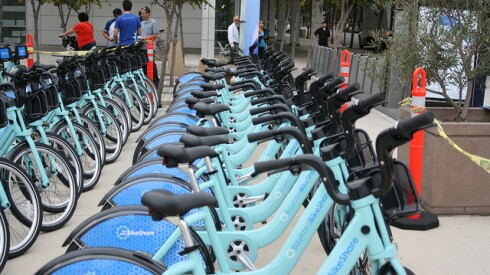
Research has shown that the Citi Bike bike-share program in New York City is predominantly used by men. How can local areas ensure a public transit system serves everyone? Experts weigh in.
-
State, local, territorial and tribal entities have used $150 billion from the Coronavirus Relief Fund — part of the CARES Act — for many things. But with the Dec. 31 deadline approaching, some still have a lot left.
-
K-12 schools gave students laptops and tablets to let them learn virtually. But many schools also closely track students’ activities on the devices — and advocacy groups are raising the call for less invasive monitoring.
-
Undergraduate programs are springing up across the U.S. to meet the burgeoning demand for workers trained in big data. Yet many of the programs lack training in the ethical use of data science.