
That same flood ruined the floorboards at Daniel Puentes' home, buckled the parquet floor in Willie Jones' converted garage and washed up to 3 inches of water and mud into the home of Matt Hess — all in the North Acres neighborhood where residents aren't in a flood plain and don't have flood insurance.
City officials acknowledge the way they paved the roads is partly to blame.
At the start of this year, a city-hired contractor finished installing some water and sewer lines below streets in North Acres, a cluster of about 300 modest homes in the hilly area between Rundberg and Braker lanes. Austin annexed the neighborhood in December 2008 with the promise of city services in exchange for the extra taxes residents would pay.
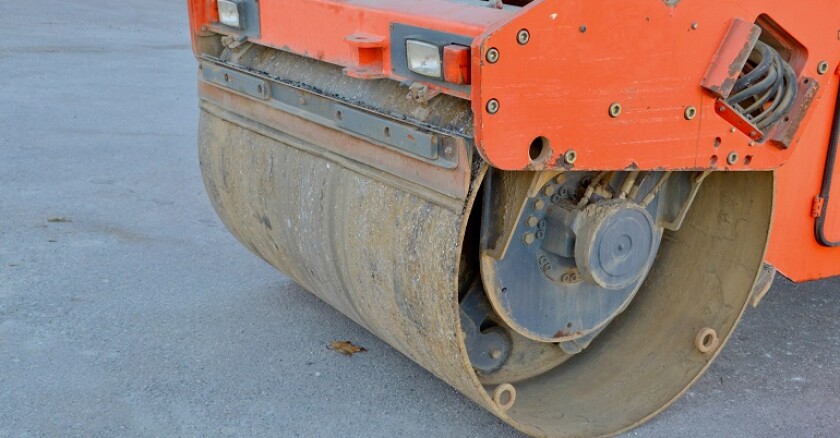
But the utility project damaged the neighborhood streets. So, with the city's permission, the contractor repaved those streets, shortening the height of gutters along the roads. Curbs that used to be 6 inches tall were reduced to 3 or 4 inches, said city engineer David Magana, and, along some stretches of road, the curb practically disappeared altogether.
"They should have known better," Hess said.
Twenty-five households in North Acres reported experiencing flooding in the first half of the year, said Jorge Morales with the city's Watershed Protection Department.
Only four households had told the city they'd flooded in the past, and Travis County engineer Steve Schiewe said county records going back to 1995 show no complaints of homes flooding there.
But the city says it's not on the hook for the thousands of dollars of damage residents have sustained. Under state law, cities have "immunity from monetary damages" when "engaged in governmental functions like water and wastewater services," city spokesman David Green wrote.
Six years after the city began designing the $15.7 million project that the Austin Water Utility is paying for, North Acres residents have yet to see any benefit.
The city pledged to "substantially complete" the project, which is bringing sewer lines to a neighborhood on septic tanks, by mid-2013. Now the city estimates the project will be finished by the end of November. Green said the magnitude and complexity of the project caused delays.
The big-picture solution, such as reconstructing roads and improving drainage, would require a bond election for the $12 million to $15 million cost, a city spokeswoman said.
"You've never heard about our area because it wasn't a problem until this poor engineering job happened," longtime North Acres resident Chris Hallock said.
Firm said drainage could improve
North Acres' roads were problematic even before construction crews' machinery damaged them: They were built years ago without any "flex base," the crushed and compacted rock that typically is 6 to 12 inches deep under the road, city officials said. Just bare earth was underneath.The city didn't have the money to completely reconstruct the roads, so a city engineer and Smith Contracting Co. decided to place a layer of asphalt on top, Magana said. Magana said he didn't think the city and the contractor were "aware of any drainage issues."
Roxanne Cook with the city's Public Works Department said the city became aware in April of neighborhood concerns about flooding. By then many streets had been paved over. Morales said the city decided not to repave any more.
It wasn't until September, months after the Memorial Day flood, that the city started milling down the roads in some sections to restore curbs to their original height, at a cost of $2,772. A city spokesman said it took time to "come up with a viable solution." The fix left rough patches on roads.
Emails show that North Acres residents were warning of the potential for flooding as early as February. In response, Group Solutions, a company the city hires to communicate with neighborhoods during some public works projects, suggested drainage would actually be improved.
"I assure you that the team took drainage and erosion issues into account in their paving plan," said the Group Solutions email circulated through the neighborhood email list Feb. 13. "And while it may seem that the shortened curbs and gutters could increase flooding, the engineers assure us that the smoothness of the new road surface … will allow water to run down the road much more efficiently, meaning less water running into the gutters."
The email later said, "The only exception would be an unusually powerful rain event. … In those cases, flooding is always a possibility."
One flooding fix undone
Morales said that's exactly what happened during the Memorial Day storm, which was preceded by historic levels of rainfall that had already saturated the ground.The neighborhood already has drainage problems, Morales said. Rainwater flows down from the area around Interstate 35 and through North Acres, which is east of the freeway and 104 feet lower in elevation, city staffers said. North Acres isn't in a flood plain because the water running through the neighborhood is from rainfall, not from nearby Walnut Creek overflowing its banks, Morales said.
There are only three stormwater inlets in North Acres, Magana said, though the city is adding another three.
Homes in North Acres would have flooded Memorial Day regardless of the city project, Morales said. But the added layer of asphalt meant houses received an extra inch of water, he said.
But Dodd, who has lived in North Acres for 37 years, said her home also flooded in smaller storms after the city repaved the roads.
The first two times, her garage was flooded with 1 to 2 inches of water. The Saturday before Memorial Day, a tornado ripped through the neighborhood, and the water got up to about 3 inches in her garage. A fallen tree created a dam that redirected some water into their house on Memorial Day.
After the 1981 Memorial Day flood had washed 2 inches of water into her house, Dodd said she had a channel dug on the side of her house.
"It worked from 1981 until 2015, when they repaved the streets," Dodd said.
After this year's Memorial Day flood, she had her driveway, front sidewalk and front porch "recontoured" to be elevated and slanted toward the street, she said. The house hasn't flooded in recent rains.
Dodd said she received a grant of about $4,000 from the Federal Emergency Management Agency, which is a drop in the bucket given the estimates of between $21,000 and $28,000 to fix her home and garage.
Camping out at home
Some North Acres residents say they can't complain too much, because Matt Hess' family got the worst of it. They moved to North Acres five years ago, as they liked the spacious, non-cookie-cutter houses among "old trees," Hess said. Hess, his wife, his wife's mother and kids ages 1, 4 and 5 live in the house.On the morning of May 15, water began seeping up through the home's foundation and bubbling out of cracks in the driveway, flowing down the driveway and entering the home, he said. It didn't stop, though Hess set up two pumps that ran nonstop to keep water out of the house.
He called 311, but the city workers who came out told him they couldn't help, he said. Water overtopped the shortened curb of a higher street running parallel to his and flowed downhill into his house, he said.
The day after the flood, city workers dug holes in the street, one of which was 16 feet wide and immediately filled with water, Hess said. Eighteen hours of pumping later, the level of water in the hole finally dropped, he said, and water stopped seeping out of the cracks in his driveway.
The neighborhood sits atop limestone known for having springs, and, during heavy rains, groundwater flowed through utility trenches dug by the city, a spokeswoman wrote. One trench happened to end right by Hess' house.
That's because the city contractor had laid down part of a pipeline by digging a trench into the street, then nestling the pipe in gravel bedding, said Mike Russ, supervising engineer with the Austin Water Utility. Another part of the pipeline was installed by tunneling into the ground, Russ said.
Magana said water always follows the "path of least resistance," so it would flow in the trench, where material is "not as tight." When water hit more compacted material, it would push upward, he said.
The city has since built an outlet costing $181,672.73 to drain water into a nearby creek.
Hess said he doesn't understand why the city built a trench with no outlet in an area known to have underground springs, comparing it to building a car with no exhaust pipe. Russ said that was never an idea on the table, as the city's "never encountered something like this before."
Hess' house also hasn't flooded in recent rains, in part because the street above him has been milled down, he said. He installed French drains on his property and purchased flood insurance.
But now he's left to deal with damage to his house that an adjuster estimated was more than $300,000, Hess said. He received a small federal grant, he said. The family has done minimal work, such as cutting out wallboard and pulling up baseboards, Hess said, because they need to be able to show the damage if they are to get some sort of relief.
"We're kind of camping in the house," Hess said.
Hess said he filed claims with the city and the insurer of Smith Contracting, but both were denied. He is considering filing a lawsuit.
"We didn't want to do that," Hess said. "We're not looking for money. We just want to put our house back together."
———
©2015 Austin American-Statesman, Texas
Visit Austin American-Statesman, Texas at www.statesman.com
Distributed by Tribune Content Agency, LLC.







