
Infrastructure
-
 A new report by the American Council for an Energy-Efficient Economy urges regulators and utilities to make the grid operate more efficiently. There are ways, experts said, to absorb part of data centers’ growth.
 -
The local government’s Board of Supervisors voted unanimously to appropriate the funds for a “comprehensive technology infrastructure remediation project.” It comes in response to a critical IT outage last summer.
-
National Grid is expected to install the devices for 121,000 customers in the city. They will enable people to track energy usage via a portal, and will immediately alert the utility to power outages.


More Stories
-
Portland, Maine, may use some of its $46.3 million in American Rescue Plan Act money to redesign two of its historic streets, Wharf and Dana. Several options are on the table, and the cost could be as much as $3 million.
-
Legislation aimed at requiring the electrification of autonomous vehicles and bolstering offshore wind power have cleared the governor’s office, as the state pushes to be a leader in the transportation and energy sectors.
-
Tesla crashes and the investigations that follow generate a lot of headlines, but the dangers of automotive automation are industrywide. The common denominator is the human behind the wheel.
-
Sound Transit needed 25 years of campaigns, taxes and labor to finally extend light rail to Northgate where, starting Saturday, thousands of people will find new ways to cross the congested city.
-
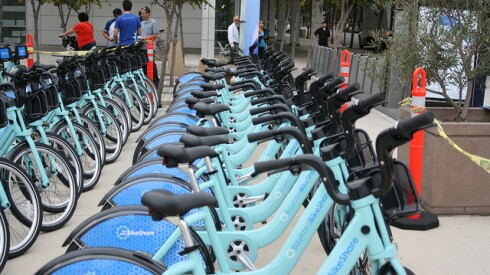
Research has shown that the Citi Bike bike-share program in New York City is predominantly used by men. How can local areas ensure a public transit system serves everyone? Experts weigh in.
-
Thanks to a $6 million grant from the U.S. Department of Defense, Springfield, Ohio, will see the construction of a National Advanced Air Mobility Center of Excellence at its municipal airport.
-
The plan includes a terminal for hyperloop, vehicles for vertical takeoffs and landings, and high-speed trains; aerial trams linking neighborhoods; and new bridges for motorized vehicles as well as bikes and pedestrians.
-
A self-driving tech company, a truck manufacturer and FedEx have teamed up to test autonomous vehicle deliveries between Dallas and Houston in Texas. The tests will have human safety drivers.
-
A survey of transit riders illustrates some of their concerns around the cleanliness of vehicles, on-time performance and the technology that seeks to improve engagement and the overall experience.
-
The Charleston airport is also moving forward with plans to extend its existing runway to 7,000 feet, with 1,000-foot overrun areas added at each end, to better accommodate future airline, military and cargo flights.
-
Michigan and Indiana are in a contest of sorts. Both states want to become the first in the nation to have wireless charging infrastructure on a public road so that electric vehicles don't have to plug in for power.
-
A six-mile traffic technology testbed in Tennessee will utilize some 300 high-definition cameras to analyze and understand traffic flow. The project will include researchers from major universities as well as automakers.
-
From May 2016 to March 2020, Maryland has overcharged drivers in the thousands via its cashless tolling system, according to a legislative audit. The state now exclusively uses cashless tolling.
-
Detroit will be one of three cities to launch autonomous delivery programs using Kiwibots. The small, electric devices will travel on city sidewalks and partner with businesses to explore automated deliveries.
-
The Cuyahoga County Council has approved the creation of a county-run utility, which will be a first in Ohio. The council sees this move as the first step in establishing a microgrid system.
-
Volkswagen has established its U.S. beachhead in right-to-work Tennessee to build a new generation of electric vehicles starting with the ID.4 SUV. VW is investing $41 billion in electrification over the next five years.
-
The COVID-19 pandemic laid bare the essential yet complex role public transit plays in the lives of citizens. Experts say this is the moment to make it physically and financially more accessible to everyone.
-
The LED lights use about 75 percent less electricity than other lights, and a study found people on the street during the darkest hours of the night found the lights effective even when dimmed to 30 percent output.




Most Read








