

Preparing K-12 and higher education IT leaders for the exponential era
Education News
-
 Odyssey CEO Joseph Connor, whose company is building infrastructure for the nation’s largest ESA rollout, says vetting local vendors is key to helping states and families make the most of digital wallets.
 -
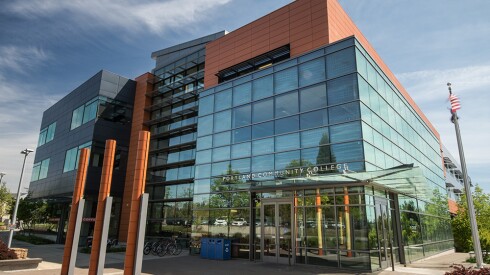
A new facility at Portland Community College is helping students practice specialized manufacturing skills and cleanroom protocols using equipment that simulates a real manufacturing environment.
-
A collaboration between Carnegie Mellon University’s CREATE Lab, the STEM Coding Lab and the Valley School of Ligonier will teach elementary students about AI’s ethical and societal implications.



The CDG/CDE AWS Champions Awards honor AWS customers who are setting new standards for innovation in the public sector.
More Stories
-
The Georgia Fintech Academy, a partnership between the University System of Georgia and some of the world’s largest payments companies, says it has served more than 10,000 students since it was established in 2018.
-
In paying $875,000 to settle a lawsuit over whistleblower allegations about broken cybersecurity rules, Georgia Tech denied wrongdoing and said there were no data leaks or breaches of information.
-
Through the AWS Machine Learning University Educator Enablement Program, Tuskegee students will work with large language models and faculty will receive specific training for incorporating the coursework.
-
The $15 million cleanroom simulator at Onondaga Community College has opened to train students for jobs at Micron Technology as well as for other tech industries.
-
High school teacher Adam Whitmore received a Teacher of the Year award from the nonprofit Air and Space Forces Association, which has chapters in every state as well as in other countries.
-
Massachusetts Gov. Maura Healey invited University of Massachusetts, Amherst students to create AI tools to assist public agencies. The students traveled to Boston last week to share their work.
-
Upper Dublin School District officials plan to install BusPatrol technology on 30 buses next month in an effort to help keep students safe at bus stops, as part of a new partnership.
-
Riverland Community College is taking a giant leap in distance learning with its Zoom Room 2.0, which offers a state-of-the-art experience for online students to interact with in-person learners.
-
Assembly Bill 1064, the Leading Ethical AI Development for Kids Act, aims to safeguard children from harmful companion chatbots. Lawmakers approved the bill and it is now awaiting action from Gov. Gavin Newsom.
-
Several community organizations are asking the University of Arizona to end its contract with a license plate reader company that has recently come under fire for sharing data.
-
Across the country, 35 states have laws or rules limiting cellphones and other electronic devices in school, including 18 states and the District of Columbia where phones aren’t allowed during school.
-
The two entities are teaming up to offer programming on artificial intelligence to the KU community and beyond. The week will include breakouts on incorporating AI, and open houses showing its applications.
-
Researchers at two universities designed and tested AI classmates, to help real middle schoolers practice math modeling. The characters have successfully engaged the students, who have praised their realism.
-
A new UNESCO report cautions that artificial intelligence has the potential to threaten students’ access to quality education. The organization calls for a focus on people, to ensure digital tools enhance education.
-
The U.S. Department of Labor has awarded the Community College System of New Hampshire a $482,658 grant to support apprenticeship programs in the state.
-
The Science Center was long a place where generations of Pinellas County, Fla., schoolchildren attended summer camps, field trips and after-school programs.
-
Two newly approved institutions at universities in North Dakota will focus on training educators, preparing students and advancing workforce development through artificial intelligence.
-
Campbell County Public Schools hosted a ribbon-cutting ceremony for the division’s new science, technology, engineering, math and manufacturing program Tuesday at Brookville Middle School.


Education Events
June 5, 2025
June 11, 2025
September 29, 2025
September 2025
September 2025
October 2025
October 21, 2025
November 20, 2025
November 2025
December 4-5, 2025
Maryland K-12 AI Leadership Conference
December 2025







