

Preparing K-12 and higher education IT leaders for the exponential era
Education News
-
 Odyssey CEO Joseph Connor, whose company is building infrastructure for the nation’s largest ESA rollout, says vetting local vendors is key to helping states and families make the most of digital wallets.
 -
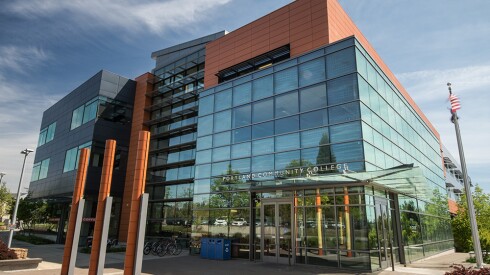
A new facility at Portland Community College is helping students practice specialized manufacturing skills and cleanroom protocols using equipment that simulates a real manufacturing environment.
-
A collaboration between Carnegie Mellon University’s CREATE Lab, the STEM Coding Lab and the Valley School of Ligonier will teach elementary students about AI’s ethical and societal implications.



The CDG/CDE AWS Champions Awards honor AWS customers who are setting new standards for innovation in the public sector.
More Stories
-
Dozens of students from Greater Johnstown and Somerset Area high schools took part in a seminar on the ethics and applications of artificial intelligence, also discussing the need for education in the humanities.
-
State and local entities had already begun to receive grant awards to teach digital skills and provide connectivity and devices for underserved people, including K-12 students, when the program was canceled last week.
-
Increasingly skeptical of higher education, students today need digital experiences and services, flexibility, personalization and data security. Some of this is a software problem that modern tools can improve.
-
A new one-acre solar farm at the university's Research and Technology Park, supported by a grant from the Federal Emergency Management Agency, is designed to reduce fossil fuel consumption and minimize risk from storms.
-
While many educators and parents have supported and attested to the efficacy of keeping smartphones out of schools, some educational organizations are warning Maine lawmakers not to overreach.
-
A bill heading to Missouri Gov. Mike Kehoe’s desk will require school districts to draft their own policies enacting a total cellphone ban for students during the school day, starting in the fall.
-
A webinar this week featuring panelists from the education, private and nonprofit sectors attested to how institutions are applying generative artificial intelligence to advising, admissions, research and IT.
-
As key players in local workforce training, community colleges are well placed to lead the adoption of artificial intelligence tools and ensure students are prepared for the business world of tomorrow.
-
In a recent webinar organized by the National Math and Science Initiative, educators discussed building STEM programs, persistent gaps in enrollment between different demographics, and how to generate student interest.
-
A San Francisco company whose General Coding Assessment is widely used by major technology companies ranked Carnegie Mellon No. 1 this year and last year, while the Massachusetts Institute of Technology was No. 2.
-
District leaders say the pandemic-era practice of giving a Chromebook to each of the district's 160,000 students is too expensive to sustain, and they need to reallocate money being spent on them for HVAC upgrades.
-
The university launched a new center this month aimed at collecting data and developing intentional, research-supported educational tools based on how students and educators are using AI in classrooms.
-
This fall, Washtenaw Intermediate School District in Michigan will use state funds to expand career and technical education, particularly drone aviation, as well as mechatronics and construction engineering.
-
Federal investigators found that a Washington school district complied with program rules when it used Emergency Connectivity Fund dollars to purchase Chromebooks, despite a state audit alleging record-keeping issues.
-
Schoolhouse, a nonprofit established by the founder of Khan Academy, worked with experts in civil discourse to launch a new program that helps students have respectful discussions on controversial topics.
-
The K-12 courseware company Edmentum has added trade-specific online career and technical education courses for middle and high school students from Interplay Learning to its platform.
-
The waiver would specifically target courses in engineering mechanics, electricity manufacturing, semiconductor fundamentals, and other technical fields where Ohio is experiencing workforce shortages.
-
The first four-year degree offered by the Washington college will focus on project- and work-based learning and branch out from traditional coding into topics like cybersecurity, data science and app development.


Education Events
June 5, 2025
June 11, 2025
September 29, 2025
September 2025
September 2025
October 2025
October 21, 2025
November 20, 2025
November 2025
December 4-5, 2025
Maryland K-12 AI Leadership Conference
December 2025







