
- Brooklyn's Laptop Fix-a-thon
- Northern California Broadband Summit
- Rural Broadband Protection Act Advances
- N.J. Workforce Training Includes Digital Skills
- Provider Launches Affordable Wireless Plan
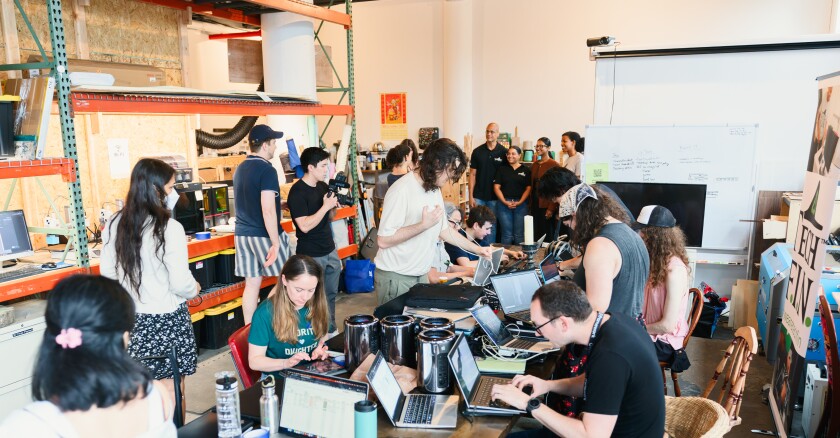
BROOKLYN'S LAPTOP FIX-A-THON
The Brooklyn fixathon event, held Monday, aimed to address two challenges: electronic waste and a gap in device access. Through the initiative, 20 donated laptops were refurbished to be used in digital literacy programs.
These 20 devices would have otherwise been discarded, but now they will be used in programs that are intended to support the community, with particular consideration given to immigrant women learning English and people looking to enhance their job readiness. Sixty refurbished laptops donated by Technology for Families in Need (TechFIN) will also be used for this programing.
The fixathon was hosted by the Public Interest Research Group and TechFIN, in partnership with City Councilmembers Shahana Hanif and Jennifer Gutiérrez. The initiative takes laptops “that would have been trash and turns them into tools for equity,” Hanif said in a statement.
It took place prior to Microsoft’s plan to end support for Windows 10 in October, an action that is expected to make 400 million laptops obsolete across the world.
“The City needs to step up with a comprehensive plan that treats this like the urgent infrastructure issue it is,” Gutiérrez, who is also chair of the council’s Committee on Technology, said in a statement.
In related news from the Big Apple, a report released Monday by the local think tank Center for an Urban Future examines digital access disparities in the Bronx community. Nearly one-third, or 31 percent, of households in the Bronx lack a computer; in Brooklyn, that number is 21 percent, according to the report.
NORTHERN CALIFORNIA BROADBAND SUMMIT
The seventh annual Virtual Broadband Summit held by the North State Planning and Development Collective at California State University, Chico, and the Northeastern and Upstate California Connect Broadband Consortia, is slated for Aug. 28 from 9-11 a.m.
The event is free to attend and is recommended for community leaders, government officials, business owners, residents and any other Northern California stakeholders interested in digital equity work in the region.
Speakers on the agenda include: Sunne Wright McPeak, president and CEO of the California Emerging Technology Fund; Scott Adams, deputy director of broadband and digital literacy at the California Department of Technology; and Maria Ellis, deputy director of broadband with the California Public Utilities Commission.
RURAL BROADBAND PROTECTION ACT ADVANCES
The U.S. Senate has passed the bipartisan Rural Broadband Protection Act, which would require the FCC to more thoroughly vet providers applying for federal funding opportunities to ensure they are able to deliver reliable broadband access to rural communities.
“As co-chair of the Senate Broadband Caucus, I’ll keep fighting to close the digital divide and ensure Minnesota families can reliably access the high-speed Internet they need,” U.S. Sen. Amy Klobuchar, who led this bill with Sen. Shelley Moore Capito, said in a statement.
In a statement, Capito urged the U.S. House of Representatives to quickly pass the legislation, arguing it will help ensure funding is used properly, including Universal Service Fund (USF) dollars. In a 6-3 decision, the U.S. Supreme Court recently upheld the USF.
N.J. WORKFORCE TRAINING INCLUDES DIGITAL SKILLS
The New Jersey Department of Labor and Workforce Development (NJDOL) is using $6 million in new grant funding to support nonprofit, for-profit, governmental and higher education institutions in integrating digital literacy training with their workforce programs. The Digital Equity Training Grant will support Work First New Jersey (WFNJ) recipients, the state’s cash assistance program for eligible state residents.
The grant recipients will provide participants with skill assessments, training and supportive services to enable technology access and adoption.
The program will empower WFNJ participants with “digital skills and industry-recognized credentials and certifications that are needed in today’s job market,” NJDOL Commissioner Robert Asaro-Angelo said in a statement. The majority of jobs today require digital skills.
Another benefit of the initiative is increased partnership between the public and private sector within workforce training programming. More information can be found on the NJDOL website.
PROVIDER LAUNCHES AFFORDABLE WIRELESS PLAN
Mission Telecom, a nonprofit telecommunications provider and grant maker has launched a new plan called “Mission Connect,” offering schools and libraries an affordable and unlimited wireless solution starting at $7 a month. The plan is $84 a year for schools and libraries that sign up before Aug. 1.
The plan aims to fill gaps left by a shifting federal funding landscape and address concerns about the potential end to the E-rate program. Notably, it also is intended to simplify the application paperwork process. The service includes Children's Internet Protection Act-compliant content filtering for safer Internet use.
Find more information on the provider’s website.










