
- Vermont Expands Apprenticeship
- Congressmembers Request Clarity on BEAD
- $52.6M for New York Broadband
- Rural Broadband Legislation
- Michigan Jail Offers Digital Literacy Program
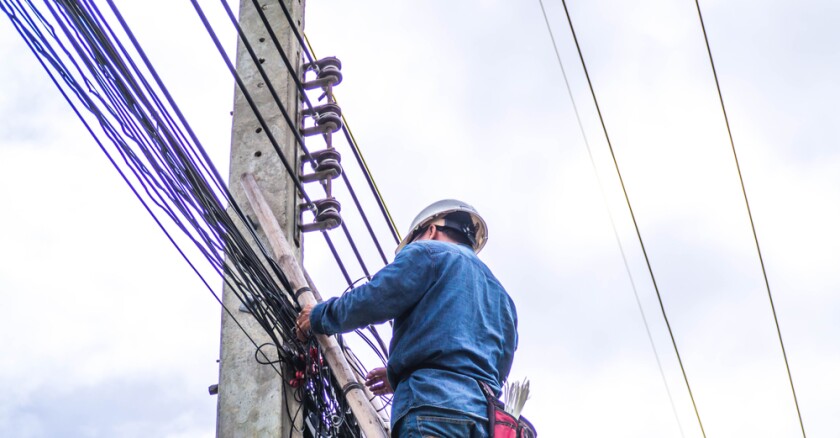
VERMONT EXPANDS APPRENTICESHIP
The Vermont Community Broadband Board (VCBB) is sponsoring a new session of its Broadband Technician Apprenticeship/Pre-Apprenticeship Training, officials announced on Tuesday.
The new session marks the program’s fourth comprehensive training course, available to participants at no cost.
“We’ve already put 14 Vermonters to work bringing broadband to their hometowns, families, and neighbors,” VCBB Executive Director Christine Hallquist said in a statement about the program’s demand. “Now we’re looking for more folks who want to start or pivot to a job that can lead to a variety of high-paying careers in technology.”
The program aims to support the state’s implementation of a $229 million investment in federal funding through the Broadband Equity, Access and Deployment (BEAD) Program.
The three-week course will start Sept. 17 and will cover essential broadband skills like splicing testing, repairing fiber-optic cables, and how broadband works from a physics standpoint. The course will also cover safety information and pole climbing.
Similar broadband workforce training programs have been launched in Ohio and other states. The federal government’s historic investment in broadband is expected to create high-paying jobs across the U.S.
CONGRESSMEMBERS REQUEST CLARITY ON BEAD
This summer, the federal government released widely anticipated revisions to BEAD Program rules, changes which faced criticism for "undoing" states' progress on a program enacted by Congress.
Now, U.S. Congressmembers are calling on Commerce Secretary Howard Lutnick and Assistant Secretary Arielle Roth in a letter to provide clarity on how nondeployment funds can be used.
The June 6 BEAD Restructuring Policy Notice (BRPN) stated that these details were forthcoming; and as the Sept. 4 deadline approaches, representatives requested a response to the inquiry by Tuesday.
“The law is clear: BEAD funding is not limited to broadband infrastructure deployment,” the letter said, underlining that Congress ensured this flexibility intentionally. However, because the BRPN stated that “Funding for allowable non-deployment purposes in under review,” the letter argued that clarity will empower states to move efforts forward.
$52.6M FOR NEW YORK BROADBAND
In New York state, $52.6 million in funding through 15 broadband infrastructure awards from several grant programs will support Internet expansion. The funding comes from the Municipal Infrastructure Program, Affordable Housing Connectivity Program and Deployment Program County Partnerships, all of which are part of the state’s ConnectALL initiative, which intends to expand connectivity in the state through public-private partnerships.
The investment will lead to 234 miles of new fiber infrastructure directly connecting 24,000 total households, businesses and anchor institutions — 19,000 of which are affordable housing units.
The investment, announced last week, is expected to support economic development across 28 counties, making broadband service prices below the regional averages — and in some cases, as low as $10 per month.
RURAL BROADBAND LEGISLATION
Bipartisan legislation known as the Middle Mile for Rural America Act was introduced last week in the U.S. House of Representatives. If passed, this bill would reauthorize the Middle Mile Broadband Infrastructure program, which provides funding for expansion of infrastructure that can reduce the cost of connecting unserved and underserved locations across the U.S.
“Reliable internet connection helps our businesses on Main Street grow, our farmers monitor market fluctuations and commodity prices in real time, and our families stay connected to the world,” Rep. Randy Feenstra said in a statement.
A 2020 report underlined that the country needs more open-access, middle-mile networks to promote private investment and competition.
MICHIGAN JAIL OFFERS DIGITAL LITERACY PROGRAM
A digital literacy program is now available to people who are incarcerated in the Livingston County Jail in Michigan, as reported by WILX News 10.
The program, the NorthStar Digital Literacy Course, teaches inmates computer skills like how to use the Internet and email.
Early program results indicated major knowledge gaps in terms of basic digital literacy skills, which the county’s Sheriff Mike Murphy told WILX News 10 informed officials “that we’re on the right track” with this two-week course. Those who pass the course will receive a free laptop upon their release.
Offering digital literacy training to individuals who are incarcerated can bolster the IT workforce and support re-entry; education can also reduce recidivism.










