
Policy
-
 Jackson County, Mo., could soon take steps aimed to ensure new data centers are not constructed in unincorporated areas of the county, at least temporarily.
 -
Statewide, more than 180 law enforcement agencies ― nearly a third of all agencies in Michigan ― now use Flock Safety technology, according to data compiled by the company.
-
The National Association of State Chief Information Officers’ fourth look at the chief privacy officer role finds 31 states now have one — but lack of staffing and funding are among the challenges.


More Stories
-
The bill would have also created a study of current Internet neutrality with the goal of providing consistent consumer rates and mandatory fee disclosures, including total prices.
-
The law relieves data centers, hospitals and other critical infrastructure from state regulations around building high-capacity generators. It eases the process, following the abandonment of one such project.
-
A proposed law requiring parental consent for people under age 16 to open a social media account passed the state’s House of Representatives with bipartisan support. It heads to the state Senate, where a similar bill has been tabled.
-
Secretary of State Antony Blinken said the plan aims to build domestic emerging tech strengths and collaborations with like-minded partners on international supply chains and global norms of safe and rights-respecting technology use.
-
Among its directives, the order from the Maryland county’s executive creates an AI task force that will be responsible for drafting strategies, use cases and priorities. “Digital access equity” is central to that work.
-
Laws that would bar social media companies from collecting children’s personal data, and from using addictive feeds to keep young users online, are expected to clear the Statehouse. That’s despite opposition from large tech companies.
-
Generally, only three types of locations are statewide no-fly zones for the aerial devices. And, while the Show Me State has laws on recording people without their consent in private spaces, they don’t cover many drone uses.
-
The National Highway Traffic Safety Administration has approved a mandate that will require automatic emergency braking systems for new vehicles by September 2029.
-
With a crowd of more than 900 people, the NASCIO Midyear Conference buzzed with energy about generative artificial intelligence, along with concern that humans remain in charge.
-
The Senate Subcommittee on Communications, Media and Broadband heard from experts on what ending or lapsing the federal Affordable Connectivity Program would mean to millions who rely on it for Internet access.
-
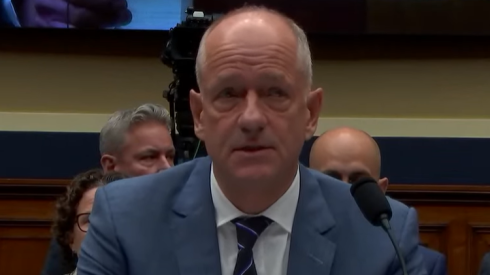
At a congressional hearing, UnitedHealth Group CEO Andrew Witty said the cyber theft includes personally identifiable information on “maybe a third” of all Americans.
-
As the cost of related subsidy programs balloons and data centers proliferate, lawmakers in several states are rethinking their posture as they consider how to cope with the growing electricity demand.
-
The proposal is called the American Privacy Rights Act, and it aims to “make privacy a consumer right” and “give consumers the ability to enforce that right,” doing so at a pivotal moment.
-
Austin lost Uber and Lyft service for more than a year after the companies fought a city ordinance requiring drivers to be fingerprinted to protect passengers. Minneapolis may be headed somewhere similar.
-
Federal legislation from Santa Ana Democratic Rep. Lou Correa would compel leading border officials to make sense of how artificial intelligence could help in securing the nation’s border. AI already plays a part in immigration enforcement.
-
As governments grapple with how to roll out generative AI — or whether they even should — policies in Seattle, New Jersey and California aim to to be broad, easy to understand and relevant in the face of change.
-
As a rise in cyber and ransomware attacks on health-care facilities leaves hospitals vulnerable, legislators and health-care providers are hoping to work together to improve cybersecurity measures.
-
Net neutrality has now been a partisan football for more than two decades, dating back almost exactly to when high-speed broadband connections began to supplant dial-up modems.




Most Read

- Virtual Learning Boomed, but Now States Struggle to Govern It
- Yuma County, Ariz.’s New CIO Hails From the City of Yuma
- Funding California IT Like Other Types of Infrastructure
- Is there a bike bell that you can hear even with noise-canceling headphones?
- Casper, Wyo., Will Use AI to Analyze Police Bodycam Footage







