
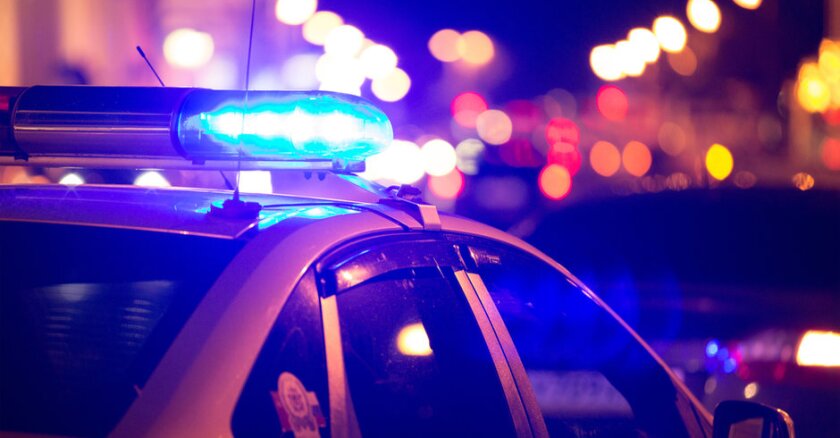
Cary's first two Tesla Model Y patrol cars made their debut during the town's Christmas parade last weekend. They are the first in a long effort to gradually convert the town's fleet of vehicles to electric, including the roughly 130 cars and SUVs used by the police department.
"Electric is our new standard," said assistant town manager Danna Widmar.
That's in large part because the town wants to use less fossil fuel and create less pollution. But it turns out going green is also more cost efficient in the long run.
The town paid $48,990 for each of the Teslas and another $15,250 each to equip them with lights and other features for use as patrol cars, said Brandon Pasinski, the town's fleet manager. The town also paid $58,000 for a charging station.
Add it all up and the town paid about $10,000 more per car than the Ford Explorers in the department's fleet.
But with lower fuel and maintenance costs, the town expects to come out $4,000 ahead per car in five years, their expected life span.
"If we're able to refurbish the vehicle, that would be considerably more," said interim police chief Terry Sult. "Because with these things, change a couple motors, change the battery, make sure you've got good seats and suspension, you've got a brand new car."
The department is using the Teslas in its traffic unit, which enforces speed limits and responds to accidents. They have a range of about 324 miles between charges, which is about three times as far as an officer will drive during a typical shift, Sult said.
The department will be assessing their durability in the coming years, Sult said, but the first impressions are that the Teslas perform better than gas-powered cars.
"I've been in this business for five decades. The best performing police car I've ever driven was a Dodge Charger," he said. "And this has the Dodge Charger hands down, from a purely performance perspective."
Other government agencies looking at electrics
Police departments across the country are experimenting with electric vehicles, either for environmental reasons or to prepare for a potential future when most cars and trucks run on electricity.
The State Capitol Police Department has three fully electric Chevy Bolts, one fully dressed and equipped as a patrol car. They are among the first acquired by the state Department of Public Safety under Gov. Roy Cooper's Executive Order 80 on climate change. The order, issued in 2018, set a statewide goal of reducing greenhouse gas emissions by 40% statewide from 2005 levels by 2025 and of increasing the use of electric vehicles.
Most of the $186,500 Cary paid for the Teslas and the charging station came from a drug forfeiture fund, money that must be used for law enforcement purposes, Widmar said.
The town will also use other types of electric vehicles. Earlier this year, it ordered its first electric sanitation truck, though delivery has been delayed by supply chain problems.
Widmar said whatever vehicles Cary buys in the future must meet its needs, but the town will look at electrics first.
"It may or may not be all Teslas," she said. "There's technology changing all of the time, so we're seeing a lot of newer electric vehicles out recently."
Sult said the Tesla is too small for the police canine unit, so the department will have to look for something larger, such as the F-150 Lightning pickup expected to become available in 2022.
The Teslas are not the first electric vehicles for the police department. It still has unmarked Nissan Leaf that it bought a couple of years ago.
And three months ago, the department took delivery on a new electric golf cart, decked out with police decals and blue lights. Officers use the cart to patrol in and around downtown, Sult said.
© 2021 The News & Observer (Raleigh, N.C.). Distributed by Tribune Content Agency, LLC.









