Justice & Public Safety
-
 Inside a growing push from state and community leaders to modernize re-entry, reduce recidivism and strengthen public safety through technology. Digital literacy, one said, can be a major barrier.
 -
After roughly 90 minutes of public comment, nearly all in opposition, the Flagstaff City Council voted to end its contract for automated license plate readers. The devices came into use last year.
-
Gov. Tony Evers has signed legislation authorizing the Wisconsin Department of Justice to award grants for platforms aimed at improving information sharing among law enforcement.


More Stories
-
Santa Clara County inmates may soon be forced to wear non-removable electronic wristbands that would track their movements inside jail under a proposal that is drawing skepticism among advocates of civil liberties.
-
Manchester police hope to have the technology to detect gunshots in place throughout the city by this summer, resulting — in theory — in quicker response times to incidents of gun violence.
-
Tacoma, Wash., Police Chief Avery Moore presented his crime reduction plan to the city council yesterday. The plan will lean on data to identify where crimes are being committed the most.
-
After almost a year and a half of allowing electric scooters on its streets, Seattle has seen the number of scooter trips dwarf the number of bike trips. Some city council members still have safety concerns, however.
-
U.S. Immigration Customs and Enforcement has been using an app called SmartLINK to monitor immigrants. The app was touted as an alternative to detention, but civil rights groups believe the app violates privacy.
-
Michigan Secretary of State Joceyln Benson walked back the statement that her office wouldn't release to media the driving records of "victims of violence" just seven hours after she made the comment.
-
The company hopes to gain revenue by offering upgrades to the free software offered to emergency dispatch agencies. The funding round comes as NG911 work gains more investor and public interest.
-
A trio of nonprofits has created a new digital online tool enabling companies to measure racial equity and environmental factors when deciding where to locate offices, factories, or other facilities.
-
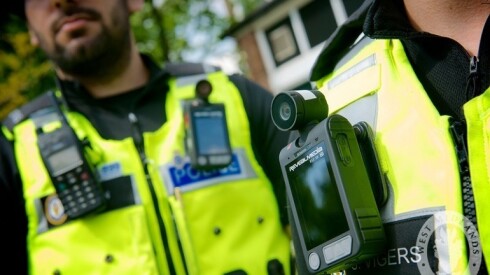
After eight years of study, Wisconsin’s capital city could take its first major step toward joining the growing number of U.S. communities that equip their police officers with body-worn cameras.
-
Maine's county and city governments received a total of $191 million in American Rescue Plan Act funding, but the majority of the money hasn't been spent. Officials say they're deliberately sitting on the money.
-
This week, the “In Case You Missed It” crew talks about weapon detection in light of the New York subway shooting and the Center for Digital Government’s Teri Takai gives an overview of the Government Experience Awards.
-
Following interviews with 27 people who work directly in the country’s courts systems, a study by Next Century Cities has found that digitizing the courts may exclude residents on the wrong side of the digital divide.
-
After years of hashing out concerns with privacy advocates, the BART board on Thursday approved an up to $2.4 million contract to install license plate readers at parking lots throughout the transit system.
-
A new survey from Veritone shows respondents support police using technology such as body-worn cameras and facial recognition technology when used to find criminal suspects. Can they be used to increase trust as well?
-
Solar power means the cameras can be placed in more locations, while AI means police can search more easily for vehicle type rather than just license plate number. It’s a trend law enforcement has been moving toward.
-
The scenic national campground sites in the United States that require highly competitive and hard to get reservations see more white, high-income visitors than campsites that don’t require reservations.
-
As part of a legal war over unemployment bills, the Michigan Unemployment Insurance Agency has interrupted a court decision that would have halted collections on pandemic jobless aid.
-
Conservative groups in Colorado have filed a lawsuit in response to new transportation fees that came from a bill signed by Gov. Jared Polis last year. The lawsuit claims state lawmakers illegally side-stepped voters.