-
 The nonprofit believes preparing students for a digital future is less about expanding access to devices than about ensuring technology use is grounded in purpose, understanding and meaningful outcomes.
 -
After transitioning from Fairfield University’s leader of enterprise systems to director of IT strategy and enterprise architecture for the state of Connecticut, Armstrong will return to higher-ed leadership in January.
-
To prevent students from relying on artificial intelligence to write and do homework for them, many professors are returning to pre-technology assessments and having students finish essays in class.


More Stories
-
Warning of a ransomware attack on Friday, Norman Public Schools asked families to turn off any devices issued by the district and not connect them to any network until further notice while law enforcement investigates.
-
The international encoding standard Unicode has included Kaktovik numerals, designed by Iñupiaq students almost 30 years ago, in its latest version. Teachers in Alaska say it has spurred an interest in math.
-
Idaho's Empowering Parents program, launched last month and administered through the online platform Odyssey, provides microgrants to help families purchase technology, textbooks, tutoring and educational programs.
-
The U.S. Environmental Protection Agency announced the recipients of its Clean School Bus program last week, awarding 389 school districts some $965 million toward the purchase of more than 2,400 school buses.
-
Under a new state rule proposed Thursday, Texas schools would have to keep two-way emergency radios on campus, install panic buttons in classrooms, and have weekly door inspections to ensure they close and lock.
-
Two Colorado school districts worked with SchoolBlocks.com to overhaul their websites, their "windows for the outside world," to make them more attractive, accessible, informative and easier to use.
-
At a Thursday webinar panel for the Educause Annual Conference, former U.S. Secretary of Education and Chicago schools CEO Arne Duncan described technology access and degree completion as major issues facing higher ed.
-
Students are invited to learn about Radioisotope Power Systems (RPS), used by spacecraft as a kind of nuclear battery, and design an RPS-powered space mission for a chance to attend a virtual event with NASA experts.
-
When schools share photos with identifiable student faces on their official Facebook pages, they might land on the radar of facial recognition tools used by law enforcement, foreign governments or worse.
-
A grant from the U.S. Department of Commerce's Connecting Minority Communities Program will allow the southwest Georgia university to improve its broadband infrastructure and hire and train IT personnel.
-
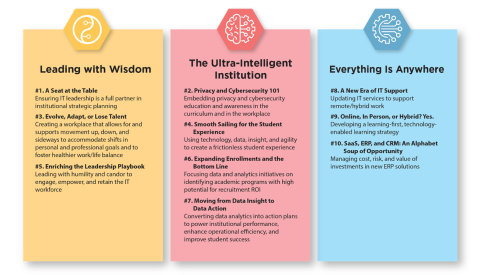
Making sure CIOs have a seat at the leadership table and reducing staff turnover are both key IT challenges in higher education today, according to the ed-tech advocacy organization Educause at its annual conference.
-
Year-over-year data suggests students are becoming more comfortable with, and optimistic about, online learning, while educators and institutions are advised to track student outcomes after implementing new technology.
-
A South Carolina school district purchased charging systems and 16 fully electric school buses, which will include mobile two-way radios, camera systems, Wi-Fi capability and GPS/telematics systems.
-
A data-extortion group that stole information from Davenport School District in Iowa in September claims to have posted some of it, but a threat analyst says the group may be baiting the district or bluffing.
-
Anticipating stricter emissions standards in the years to come, Bigfork, Clinton and Fairfield school districts will use funding from the EPA's Clean School Bus Program to start replacing diesel buses.
-
The ed-tech company’s Harvard and MIT-created subsidiary edX will offer online programs from dozens of universities in tech fields such as data analytics, cybersecurity, UX/UI, fintech and web development.
-
A consortium of Western Massachusetts colleges and universities has received a $1.46 million state grant to establish a security operations center and cyber range at Springfield's Union Station.
-
New York City's $4 billion "Leading the Charge" plan proposes guidelines for new school buildings, the conversion of fossil fuel combustion boilers to ultra-low biofuel, and the installation of LED lights in 800 schools.