-
 Born from the chaos of 9/11, FirstNet provides a mobile phone network designed for public safety professionals. The new deal comes as the U.S. Congress considers a 10-year reauthorization of FirstNet.
 -
At the Emergency Medical Services Academy in Clatsop County, Ore., teens get firsthand exposure to emergency medicine and rotate through ambulance services, fire departments, hospitals and the Life Flight base.
-
The National League of Cities will work with tech company BRINC to educate cities, towns and villages on standing up drone-as-first-responder programs. That includes assistance on FAA approvals and training.


More Stories
-
After the success of an AI-powered wildfire threat detection pilot, the Washington State Department of Natural Resources envisions how a real-time camera response center could safeguard millions of acres of forestlands.
-
-
A new tool from public safety tech supplier Axon can automatically transcribe audio from the company’s body cameras. Arriving as law enforcement nationwide confronts a hiring crisis, it could free up officers for other duties.
-
The Next-Gen Emergency Vehicle Preemption technology provides first responders the ability to alter traffic lights on a complete route to an event, not just one light at a time.
-
The Canada-based gov tech supplier has acquired a company that sells CAD, RMS and other tools for first responders and public safety agencies. Versaterm’s CEO explains the thinking behind his company’s latest deal.
-
First responders, law enforcement officers, tow truck drivers and construction workers are all vulnerable on the roadways for a variety of reasons and subject to being hit and killed by distracted drivers.
-
The Allen County, Ohio, Sheriff's Office and Allen County Emergency Management Agency set up an Emergency Operations Center. Weather conditions appear to be nearly perfect for today's eclipse.
-
The United States Geological Survey has a burgeoning camera system that monitors mostly river systems that emergency managers can use to visualize and gather data on flooding threats.
-
“It’s the one place that I can think of in the country that you can walk into and just punch a worker in the face and the response is something like, ‘Okay, we’re sorry that something upset you, do you want a sandwich?’”
-
"We get to see the different types of container cars — how they function. This helps us relay information to the railroad. We learn the terminology so we can tell Norfolk Southern what's needed."
-
The state began transitioning in November 2018 when Durham County 911 joined via AT&T ESInet, hosting a hosted call solution and text messaging, and Anson County 911 completed the state’s transition in February.
-
First responders rely on their radios to save lives and to keep themselves safe. When those radios don’t work at optimum levels, it creates potentially dangerous situations that persist in some jurisdictions today.
-
Population growth has strained emergency services in the county and, combined with the pandemic, created a "perfect storm" that exposed the difficulties EMS was having keeping up with the influx of residents.
-
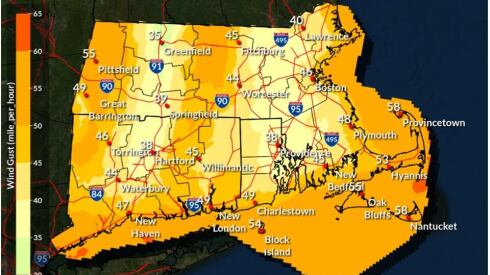
The weather service issued two high-wind warnings and one wind advisory that together cover the state. The two areas expected to experience the strongest winds are the eastern Massachusetts coast and the northern Berkshires.
-
"I would roughly guess we typically see four or five hundred cars a day come up (Route) 201, multiply that by 10 times, and that’s a factor,” said Mike Smith, Somerset County, Ohio, Emergency Management director.
-
The Alli Connect platform uses machine learning technology to help first responders connect with mental health professionals before their problems become severe and prioritizes user privacy.
-
Newer vehicles come with safety features including high-voltage batteries, advanced restraint systems and other onboard technologies that can cause difficulties for first responders trying to extricate a crash victim.
-
"We don't do any predictive policing or use artificial intelligence to predict where crime will occur. We don't use any predictive analytics," said Joe Leibold, chief of the Waterloo Police Department.