-
 As artificial intelligence and digital tools continually reshape their coursework, students say common frustrations include a lack of clear AI guidance, an overabundance of tools and apps, and Wi-Fi connectivity issues.
 -
A multiyear initiative between a private historically Black liberal arts college and a tech company will expose up to 750 high school students in the Birmingham area to AI technology and workforce opportunities.
-
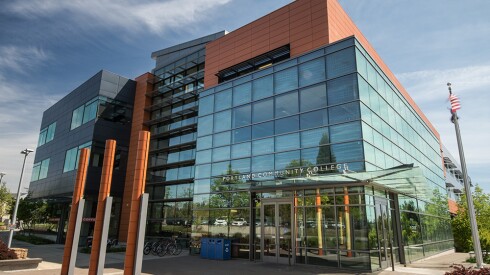
A new facility at Portland Community College is helping students practice specialized manufacturing skills and cleanroom protocols using equipment that simulates a real manufacturing environment.


More Stories
-
A new one-acre solar farm at the university's Research and Technology Park, supported by a grant from the Federal Emergency Management Agency, is designed to reduce fossil fuel consumption and minimize risk from storms.
-
A webinar this week featuring panelists from the education, private and nonprofit sectors attested to how institutions are applying generative artificial intelligence to advising, admissions, research and IT.
-
As key players in local workforce training, community colleges are well placed to lead the adoption of artificial intelligence tools and ensure students are prepared for the business world of tomorrow.
-
A San Francisco company whose General Coding Assessment is widely used by major technology companies ranked Carnegie Mellon No. 1 this year and last year, while the Massachusetts Institute of Technology was No. 2.
-
The university launched a new center this month aimed at collecting data and developing intentional, research-supported educational tools based on how students and educators are using AI in classrooms.
-
The first four-year degree offered by the Washington college will focus on project- and work-based learning and branch out from traditional coding into topics like cybersecurity, data science and app development.
-
Before students can become competent at editing and refining writing produced by generative artificial intelligence, they need to learn how to write clearly and convincingly as themselves. To do that, they need practice.
-
The California Community Colleges Chancellor's Office estimated that 31.4 percent of student applications in 2024 were fraudulent, coming from bots or AI agents being used to steal financial aid money.
-
An English professor from Kennesaw State University argues that intentional use of artificial intelligence, as opposed to passively or reflexively accepting its outputs, can enhance the writing process.
-
In a national survey of 501 college students, researchers at the University of Texas at Austin found that more than 40 percent had a condition the ADA might recognize as a disability. Some said digital tools aren't meeting their needs.
-
In addition to 13 universities, the Association of American Universities, the American Council on Education, and the Association of Public and Land Grant Universities are leading the lawsuit.
-
The university will offer a bachelor’s degree in Esports Performance Management and Coaching, much of which will focus on the health and wellness of an esports athlete.
-
Driven by the largest donation in the university's history, the Bellini College of Artificial Intelligence, Cybersecurity and Computing will focus on the intersection of AI and cybersecurity and meeting workforce needs.
-
At the University of Minnesota, medical school students have been using a virtual reality experience to understand the perspective of a woman dealing with the advanced stages of Alzheimer’s.
-
In a commencement speech to Georgia Tech's latest graduating class, Internet Security Systems, Inc. founder Christopher Klaus promised to cover startup incorporation costs for every student.
-
New features in Internet2's Cloud Scorecard for research and education enhance search capabilities and include questions about artificial intelligence to help institutions find cloud services that best fit their needs.
-
Getty Images and Ancestry will help historically Black colleges and universities preserve their records in digital form, allow them to collect licensing fees, and give students access to ancestry.com.
-
Through Maryland’s Cyber Workforce Accelerator program, students at 16 community colleges across the state have access to the Cyber Series 3000, allowing them to build cybersecurity skills in simulated scenarios.