
Social Media
Stories related to how government agencies use social media platforms like Twitter and Facebook to engage with residents, as well as the policies that govern social media practices for the public sector. Includes coverage of the impact of social media companies on government.
-
 Leaders in the chamber said the ban would be the most restrictive in the country, and it comes amid a wider focus nationwide on the mental health impact of social media on the youngest Americans.
 -
School districts suing social media companies for causing costly and disruptive mental health issues in students are encouraged by state rulings against Meta last week in California and New Mexico.
-
Two of America's largest tech companies suffered stunning defeats in court this week, sustaining early jolts in what could prove to be a seismic shift in how social media operates amid new legal risk.

More Stories
-
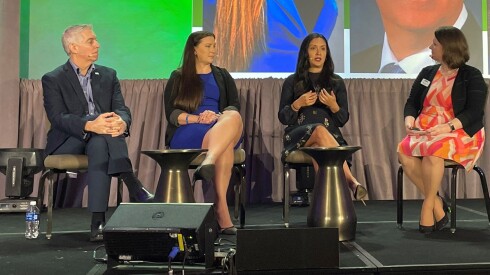
In a panel at the annual Consortium for School Networking conference, educators said social media companies and school districts can work together on student safety and combating malicious impersonator accounts.
-
The latest U.S.-China clash over TikTok is likely to worsen the already rocky relationship between the two countries, as Beijing and Washington tussle over bans and concerns about espionage and national security.
-
The United States has told the Chinese owners of the video-sharing app TikTok that they must sell their shares or risk the app being banned in the U.S., people familiar with the matter said.
-
On the heels of a similar lawsuit by Seattle Public Schools earlier this year, the San Mateo County superintendent and school board are suing social media companies for contributing to student mental health issues.
-
Citing heightened concerns about online security and data collection, Orange County employees will no longer be able to download, view or use TikTok on government-issued devices.
-
Social media companies have doubled down on last year’s lobbying efforts to fend off a bill that would have held social media companies liable for addicting children to their content. This year, a new iteration has their attention.
-
Dr. Matt Buckman, executive director and clinical psychologist at the Stress & Trauma Treatment Centers in Illinois, says a decline in interpersonal interactions among kids can lead to mental health problems.
-
The White House endorsed a bipartisan bill that could give the president authority to ban or force a sale of TikTok, support that could hasten passage and break a deadlock over how to address the popular app.
-
The measure isn’t expected to pinpoint the company by name, but it would give the U.S. the power to ban or prohibit foreign technologies or companies when necessary.
-
State and local election officials across the country have begun pursuing strategies to combat election lies and online misinformation ahead of the 2024 presidential election.
-
The State Board of Higher Education has yet to make a decision on whether or not to ban access to the social media app on college networks, but students and staff say they're aware of the information security concerns.
-
A Texas district's guidance counselors hosted an event to make parents aware of how students can be affected by social media and what their options are for managing technology's opportunities and pitfalls.
-
Restrictions against phone use are more common in private schools, where many students see them not as a diktat from above but as a collective choice for a certain way of life that they even agree to help enforce.
-
In a tech industry roiled by waves of layoffs, many companies have dangled generous sums of severance pay, but to get it, some employees must sign agreements that include a non-disparagement clause.
-
When viewers in and near East Palestine reached out via TikTok, expressing fear and concern over the derailment, she decided to put together a few resources for residents to conduct their own testing.
-
Though it drew little attention when it was first passed back in 1996, a law that has been called the rule that launched big tech is now seen as a pillar of the wide-open global Internet we know today.
-
Gov. Ron DeSantis has proposed a bill to create a “digital bill of rights” aimed at curbing big tech “overreach and surveillance.” Meanwhile, Lt. Gov. Jeanette Nuñez announced millions in cybersecurity grants for local governments.
-
Citing concerns about potential influence of entities tied to the Chinese government, Gov. Ron DeSantis announced a proposal that would block networks and devices from being able to access the social media platform.


Most Read








