Social Media
Stories related to how government agencies use social media platforms like Twitter and Facebook to engage with residents, as well as the policies that govern social media practices for the public sector. Includes coverage of the impact of social media companies on government.
-
 Given so many conversations in the public sphere about how devices and screen time are affecting developing minds (and adult ones), educators might consider how technology has changed how we live and communicate.
 -
Findings from a survey of more than 1,000 parents and teachers show how students are learning both inside and outside the formal school system through online social platforms, and often from unvetted sources.
-
The Hampden County Assistant District Attorney's Office is training high schoolers to give presentations about online safety at elementary and middle schools across Western Massachusetts.


More Stories
-
According to the draft policy under consideration, the goal is to have a cohesive online presence through municipal, departmental and committee social media sites, with the municipal website as the primary online presence.
-
The New Jersey Supreme Court is hearing a case where the state is arguing that Facebook should give it continuing access to user information to determine whether they're engaging in criminal activity.
-
The pullback of Twitter’s blue check marks led to the quick rise of fake accounts spreading lies about public services and officials. What comes next, and how can state and local governments deal with this new reality?
-
U.S. tech companies are pushing to narrow the scope of legislation that could ban TikTok in the U.S., creating new obstacles as the Biden administration seeks to confront China’s influence.
-
The Associated Press recently estimated that around two dozen U.S. lawmakers — all Democrats — still use the app from personal devices. Some have amassed sizable followings and use the app to communicate with constituents.
-
While more than half of states have banned TikTok on state-owned devices and networks, some governors still use the platform — and some unofficial accounts use their names and photos. Is it a cybersecurity risk?
-
The state is now the second in the nation with legislation requiring parental consent for child social media usage. It follows closely behind a March law signed by Utah Gov. Spencer Cox.
-
Several states are pushing legislation that would limit online access and social media use by kids, setting up yet another potential confrontation between states and Congress on technology policy.
-
Higher education leaders and students predict the State Board of Higher Education's ban, scheduled to take effect July 1, will have a negligible impact on students and university operations.
-
The app has a strikingly similar interface to the ByteDance platform: A "For You" page, a nearly identical menu bar at the bottom of the screen and an endless roll of short-form video content to consume.
-
The Florida Board of Governors issued an emergency rule last week prohibiting TikTok, WeChat, Vkontakte, Kaspersky and Tencent QQ over security concerns about the collection of faceprints, voiceprints and personal data.
-
The Purdue University system this week joined many other higher-ed institutions in blocking access to the TikTok app and website, based on a Purdue IT security audit and the terms of the app's user agreements.
-
A study from the University of Houston surveyed hundreds of Americans across 43 states to find that ideations about local crime were distorted after using neighborhood social engagement apps like Nextdoor.
-
Banning TikTok: What data privacy risk does the app pose, and what could the Chinese government do with data it collects? And is it even possible to ban an app?
-
Utah Gov. Spencer Cox has signed two new laws focused on social media companies and the platforms they operate. The new rules would set usage limits for minors and restrict how the platforms target underage users.
-
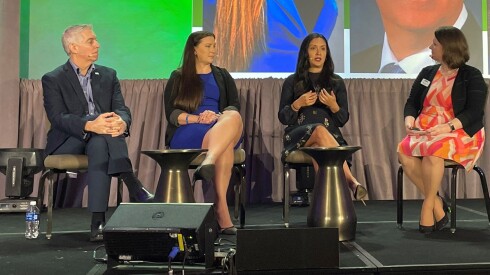
In a panel at the annual Consortium for School Networking conference, educators said social media companies and school districts can work together on student safety and combating malicious impersonator accounts.
-
The latest U.S.-China clash over TikTok is likely to worsen the already rocky relationship between the two countries, as Beijing and Washington tussle over bans and concerns about espionage and national security.
-
The United States has told the Chinese owners of the video-sharing app TikTok that they must sell their shares or risk the app being banned in the U.S., people familiar with the matter said.