

Preparing K-12 and higher education IT leaders for the exponential era
Higher Education News
-
 As artificial intelligence and digital tools continually reshape their coursework, students say common frustrations include a lack of clear AI guidance, an overabundance of tools and apps, and Wi-Fi connectivity issues.
 -
A multiyear initiative between a private historically Black liberal arts college and a tech company will expose up to 750 high school students in the Birmingham area to AI technology and workforce opportunities.
-
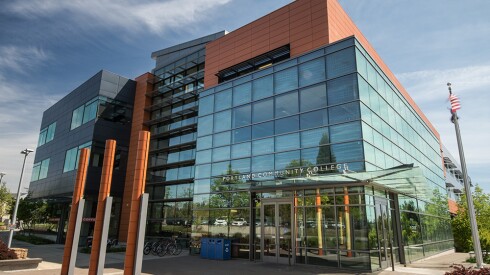
A new facility at Portland Community College is helping students practice specialized manufacturing skills and cleanroom protocols using equipment that simulates a real manufacturing environment.


More Stories
-
A new research center at Wayne State University in Michigan will focus on ethical and safe artificial intelligence deployment, regulatory compliance and mitigating unintended consequences of AI systems.
-
The Minnesota Forward Fund awarded $50 million for an aerospace research facility to be co-led by the University of Minnesota, and $5 million for semiconductor manufacturing hub at the University of St. Thomas.
-
Researchers at the University of Texas at San Antonio are using AI and digital twin technology, or digital replicas of physical homes, to study potential renovation options that could lessen heat's effects on residents.
-
The new Coaching Lab will test and scale evidence-based coaching methods to retain students and keep them on track as colleges and workforce programs face skepticism and tougher job prospects for graduates.
-
SafeTraffic Copilot, created by engineers at Johns Hopkins University, uses large language models to analyze huge amounts of data and predict how changes to streets, signs or lights could affect collision frequency.
-
In partnership with Axis Research & Technologies, the university intends to build a 36,000-square-foot surgical center with technology to give surgery students real-time feedback on skills, teamwork and procedures.
-
The California Community Colleges Chancellor’s Office is working with the ed-tech vendor Liaison to make the CCCApply system more user-friendly, automated and secure.
-
Mathematicians at Angelo State University are studying a process called “skew zero forcing," which involves new ways of modeling and analyzing the flow of information and has implications for cybersecurity.
-
In a new action plan, EDUCAUSE outlines skills, ethics and collaboration strategies to guide effective use and implementation of generative artificial intelligence on college campuses for the next decade.
-
The university's new lab includes technology to perform intra-oral scans and produce polished dentures and dental guards in minutes, giving students practice with the latest techniques in digital dentistry.
-
The first standalone cybersecurity degree at the University of Nevada, Las Vegas builds an interdisciplinary bridge between engineering and business, addressing workforce shortages.
-
Next week will mark the first time the United States hosts the Global Innovation Summit, which will convene international leaders in industry, government, business and academia to learn about AI in the health sciences.
-
A graduate of a private Lutheran university in Indiana is suing his alma mater following a data breach in August, alleging the university didn’t do enough to safeguard the data or notify impacted parties.
-
A handful of new artificial intelligence tools, purpose-built by the interactive learning platform Wooclap with input from university faculty, aim to cut prep time and deepen classroom engagement.
-
The Microsoft Elevate Washington initiative aims to close gaps in access to artificial intelligence tools and training across Washington state with free access to Copilot Studio and professional development resources.
-
Nearly all students and faculty at historically Black colleges and universities are experimenting with AI, yet fewer than half of those institutions have formal strategies.
-
As part of the federal government's emphasis on short-term training and industry credentials, a workforce grant will help Springfield Technical Community College will train 120 people for jobs in IT or cybersecurity.
-
Co-hosted by the American Public University System and Rasmussen University, the 2025 Nationwide Virtual Career Fair will offer online access to employers in technology and other high-growth industries.


Education Events
June 5, 2025
June 11, 2025
September 29, 2025
September 2025
September 2025
October 2025
October 21, 2025
November 20, 2025
November 2025
December 4-5, 2025
Maryland K-12 AI Leadership Conference
December 2025







