

Preparing K-12 and higher education IT leaders for the exponential era
Higher Education News
-
 As artificial intelligence and digital tools continually reshape their coursework, students say common frustrations include a lack of clear AI guidance, an overabundance of tools and apps, and Wi-Fi connectivity issues.
 -
A multiyear initiative between a private historically Black liberal arts college and a tech company will expose up to 750 high school students in the Birmingham area to AI technology and workforce opportunities.
-
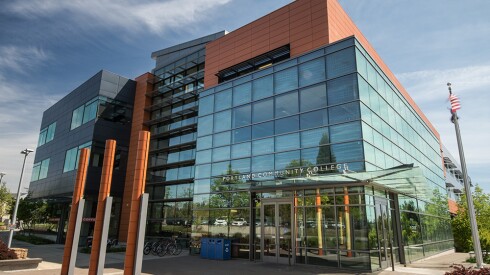
A new facility at Portland Community College is helping students practice specialized manufacturing skills and cleanroom protocols using equipment that simulates a real manufacturing environment.


More Stories
-
A new two-year program at a community college in Vancouver will train surgical technologists, who prepare equipment for medical procedures. The college also hopes to build partnerships with local health care providers.
-
A recent event at N.C. A&T State University gave hundreds of students a hands-on experience with a robotic surgical machine and other medical technologies, with labs and stations nearby to answer student questions.
-
The American Public University System’s online bachelor’s degree in esports earned the first official recognition for an esports management program from the Commission on Sport Management Accreditation.
-
The university's new regional economic development office will work with Micron to help faculty and students conduct research and to develop curriculum tailored to jobs in the semiconductor industry.
-
The Michigan Economic Development Corporation gave money to a private university to develop curricula in semiconductors, hydrogen fuel and software engineering, and to launch summer hackathon camps for PK-12 students.
-
At Central New Mexico Community College, the only program of its kind in the state is training solar panel installers at a time when clean energy jobs are growing at more than twice the rate of overall U.S. employment.
-
The Maryland Energy Administration offered grants to 11 colleges and universities to install solar panels and draft strategies to incorporate renewable energy into academics and workforce preparation.
-
The Louisiana Board of Regents projects a 42 percent shortage of registered nurses by 2030. A nursing school dean at a private Catholic university in Baton Rouge says AI tools are helping teach and mentor students.
-
The University of South Florida will put its largest-ever donation to use funding scholarships, hiring faculty and developing a new space for the Bellini College of Artificial Intelligence, Cybersecurity and Computing.
-
The university system's students and staff have free access to “AI Essentials,” a five-hour course in the Google Career Certificate program that teaches people to use AI responsibly and effectively.
-
NVIDIA is lending teaching materials and upskilling opportunities in artificial intelligence to Utah's higher education students and state workers in a new partnership with colleges and universities across the state.
-
An Honors Program at Central Michigan University challenges students to consider philosophical questions around artificial intelligence, like the nature of sentience and the ethics of using AI tools on assignments.
-
Yale University professors flagged unusually long, elaborate answers on an exam as possible cheating with an AI chatbot. Now the student alleges they discriminated against him, a French native residing in Texas.
-
The University of Chicago’s proprietary chatbot, PhoenixAI, leverages OpenAI models but serves as an open-ended platform for faculty, students and administrators to experiment and find new use cases.
-
Voters in Oklahoma this week narrowly passed a bond to improve a career and technical education center, including expanding capacity for high-demand programs like cybersecurity, programming AI and aviation technology.
-
In addition to almost every four-year college in the state, the Connecticut AI Alliance will also include six community organizations and nonprofit agencies working together to drive innovation and create jobs.
-
Connecticut Gov. Ned Lamont asked Yale instructors and students to study artificial intelligence policies across the U.S. and come back with insights and advice. Their 50-slide presentation informed what he did next.
-
A donation from venture capitalist Bill Gurley University of Texas at Austin will help support a robotics program, including freshmen research and updates to lab equipment, computing power and materials.


Education Events
June 5, 2025
June 11, 2025
September 29, 2025
September 2025
September 2025
October 2025
October 21, 2025
November 20, 2025
November 2025
December 4-5, 2025
Maryland K-12 AI Leadership Conference
December 2025







