

Preparing K-12 and higher education IT leaders for the exponential era
Education News
-
 Odyssey CEO Joseph Connor, whose company is building infrastructure for the nation’s largest ESA rollout, says vetting local vendors is key to helping states and families make the most of digital wallets.
 -
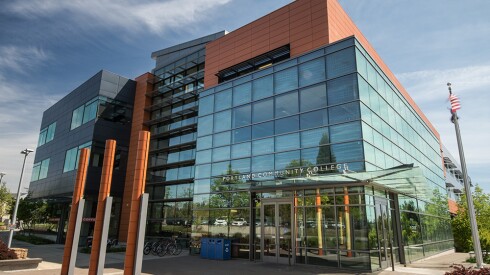
A new facility at Portland Community College is helping students practice specialized manufacturing skills and cleanroom protocols using equipment that simulates a real manufacturing environment.
-
A collaboration between Carnegie Mellon University’s CREATE Lab, the STEM Coding Lab and the Valley School of Ligonier will teach elementary students about AI’s ethical and societal implications.



The CDG/CDE AWS Champions Awards honor AWS customers who are setting new standards for innovation in the public sector.
More Stories
-
Leslie Eaves, director of project-based learning at the nonprofit Southern Regional Education Board, recommends having students show their work in brainstorming, outlining, drafting and improving drafts of writing.
-
Intended as a low-risk way to test drive generative artificial intelligence, the platform allows teachers to create content, set up AI-based classroom activities and view dashboards that track student progress.
-
Research and development for educational technology should involve a continuous loop of teachers providing feedback, developers implementing changes in real time and researchers studying the impact.
-
Before students can become competent at editing and refining writing produced by generative artificial intelligence, they need to learn how to write clearly and convincingly as themselves. To do that, they need practice.
-
A presentation by the West Virginia Public Education Collaborative this week introduced ninth and 10th graders to potential jobs associated with broadband, cybersecurity and artificial intelligence.
-
The North Carolina district learned earlier this year that a data breach of the software company PowerSchool impacted an estimated 150,000 current and former students and 28,000 current and former staff members.
-
The California Community Colleges Chancellor's Office estimated that 31.4 percent of student applications in 2024 were fraudulent, coming from bots or AI agents being used to steal financial aid money.
-
An English professor from Kennesaw State University argues that intentional use of artificial intelligence, as opposed to passively or reflexively accepting its outputs, can enhance the writing process.
-
A cyber criminal who successfully extorted the software company PowerSchool for ransom in December 2024 did not delete the stolen data as promised. Now the same culprit appears to be threatening individual districts.
-
In a national survey of 501 college students, researchers at the University of Texas at Austin found that more than 40 percent had a condition the ADA might recognize as a disability. Some said digital tools aren't meeting their needs.
-
K-12 students will have to store any wireless communication devices in their cars or lockers during the school day. Gov. Kay Ivey is expected to sign the bill, as she said in February that she supported it.
-
While other electric bus companies are ramping up production, a court-appointed monitor cast doubt on Lion's future after Quebec announced last week that it would not invest $24 million to relaunch the company.
-
Cypress and Loara high schools in California hope that HALO smart sensors in bathrooms and locker rooms will help catch vaping students by sending instant alerts to school officials.
-
An open letter in The New York Times this week, signed by over 250 CEOs, says the success of America and its future workers depends upon students learning about computer science and artificial intelligence in K-12.
-
The U.S. needs a national plan to compete with China for dominance of the next generation of world-changing technology, and the education sector needs different degrees of oversight and objectives than commercial AI.
-
In addition to 13 universities, the Association of American Universities, the American Council on Education, and the Association of Public and Land Grant Universities are leading the lawsuit.
-
Seven new schools opening across New York City include one in Brooklyn focused on using AI to help kids learn, support teachers and teach ethical use. The school will also integrate virtual reality into core subjects.
-
The university will offer a bachelor’s degree in Esports Performance Management and Coaching, much of which will focus on the health and wellness of an esports athlete.


Education Events
June 5, 2025
June 11, 2025
September 29, 2025
September 2025
September 2025
October 2025
October 21, 2025
November 20, 2025
November 2025
December 4-5, 2025
Maryland K-12 AI Leadership Conference
December 2025







