
Emerging Tech
-
 Cybersecurity experts say AI and automation are changing how much impact manipulated data can have on government technology systems.
 -
The Flathead County Sheriff's Office is set to receive a new remote underwater vehicle after getting approval from county commissioners on Tuesday.
-
The Larimer County Sheriff’s Office on Monday arrested the man after he reportedly stole a vehicle from a business in east Fort Collins, set it on fire and damaged nearby agricultural land.


More Stories
-
The company showed off its new Boeing Jacksonville Training Systems Center of Excellence, where it develops maintenance training systems for military aircraft, including the Navy’s P-8 Poseidon fleet at NAS Jacksonville.
-
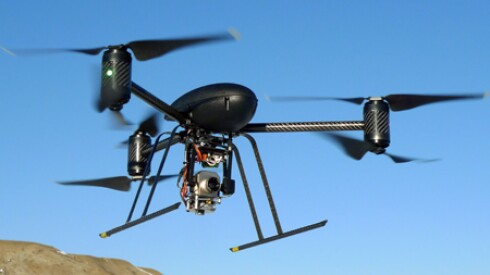
Last week, Hamilton City Council in Ohio unanimously passed legislation to ban residents from using drones to harass and spy on other citizens. However, drone supporters felt the law was too broad.
-
Tesla crashes and the investigations that follow generate a lot of headlines, but the dangers of automotive automation are industrywide. The common denominator is the human behind the wheel.
-
Regulators are going after the cryptocurrency industry, which generates trillions of dollars. Crypto firms are seeking lobbyist support in Washington, D.C., as legal arguments reach a higher boiling point.
-
Thanks to a $6 million grant from the U.S. Department of Defense, Springfield, Ohio, will see the construction of a National Advanced Air Mobility Center of Excellence at its municipal airport.
-
A self-driving tech company, a truck manufacturer and FedEx have teamed up to test autonomous vehicle deliveries between Dallas and Houston in Texas. The tests will have human safety drivers.
-
Tech company SAP is promoting the use of virtual reality to help students gain the skills they need for the job market. The company offers a VR program designed to assist students from underserved communities.
-
Michigan and Indiana are in a contest of sorts. Both states want to become the first in the nation to have wireless charging infrastructure on a public road so that electric vehicles don't have to plug in for power.
-
Now residents can call for help via certain Amazon Alexa voice-activated devices in homes. The move comes as emergency dispatchers seek more detailed information from callers and as 911 technology improves nationwide.
-
A six-mile traffic technology testbed in Tennessee will utilize some 300 high-definition cameras to analyze and understand traffic flow. The project will include researchers from major universities as well as automakers.
-
According to recent findings, more and more human resources professionals utilize artificial intelligence in evaluating employees. But such tech can lead to unfair employee appraisals or outright discrimination.
-
Plus, Japan tests the world’s fastest Internet download speeds, New York state bans Zoom weddings and the world’s smallest battery-free camera helps uncover the fate of a very tiny snail in Tahiti.
-
Detroit will be one of three cities to launch autonomous delivery programs using Kiwibots. The small, electric devices will travel on city sidewalks and partner with businesses to explore automated deliveries.
-
The Cuyahoga County Council has approved the creation of a county-run utility, which will be a first in Ohio. The council sees this move as the first step in establishing a microgrid system.
-
Alfi, a company based in Miami Beach, Fla., believes the future of digital advertising is in tech that recognizes the physical characteristics and moods of individuals. Alfi's CEO thinks "[t]he cookie is dead."
-
The Rand Corporation released a report suggesting that the U.S. military should use artificial intelligence to examine social media trends to determine whether any military members are at risk of becoming extremists.
-
Doctors at the UMass Memorial Medical Center have employed a new assistant on different surgeries: the Single-Port DaVinci robot. The robot is able to make much smaller incisions, which helps with recovery.
-
Rather than follow the trend of vaccination passports or cards, Virginia has opted to utilize QR codes to help citizens show others that they have been inoculated against COVID-19.









