
-
 The state is offering AI training developed with InnovateUS, to help employees increase their skill levels and use AI responsibly. The curriculum is available via its online learning platform.
 -
Plus, new legislation would revive the FCC’s equity council if enacted, a report reveals connectivity gaps in tribal communities, some municipal broadband networks outperform their competitors, and more.
-
Plus, Maine is looking for partners for its middle-mile network, New Mexico has enacted a law establishing a broadband affordability program, fiber infrastructure expansion is continuing, and more.


More Stories
-
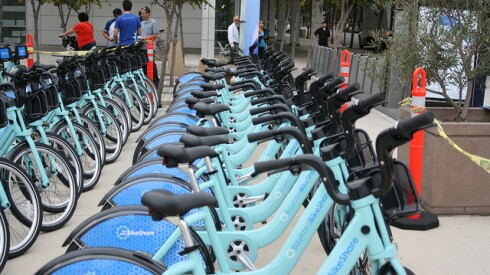
Research has shown that the Citi Bike bike-share program in New York City is predominantly used by men. How can local areas ensure a public transit system serves everyone? Experts weigh in.
-
In total, the $14.8 million in funding from the federal government will support 3,081,131 devices and 774,115 broadband connections and help connect more than 3.6 million students throughout the state.
-
Plus, Bloomberg Philanthropies teams with the U.S. Conference of Mayors on new federal recovery dollars partnership, and more.
-
Five towns in Maine — Searsmont, Liberty, Palermo, Montville and Freedom — have joined together as part of a coalition to create a municipal broadband utility for residents of Waldo County.
-
The program was developed in response to the pandemic, when the extended campus closures exposed how many students were not able to participate in online classes and programs because they had no access to mobile devices.
-
The First State has identified 11,600 homes lacking wired broadband service, and CIO Jason Clarke says fresh federal funds will enable the last-mile connections needed to reach everyone.
-
Plus, the U.S. Census Bureau makes its 2020 count data related to redistricting available in an easier to read format, a Los Angeles digital equity program offers a new IT certificate, and more.
-
The private cellular network company has partnered with cities such as Tucson, Ariz., to establish and manage new 5G/LTE networks to close the digital divide and give schools control over their users.
-
An interim rule from the U.S. Treasury Department may prevent cities from using federal coronavirus relief funds on broadband expansion efforts. A final rule could be determined in the fall.
-
Launched in June, the Public Education Department’s program has helped 110 school districts, tribal-affiliated and charter schools apply for more than $65 million in federal aid. A new application window starts Sept. 28.
-
Improving national security and filling unmet cybersecurity demand requires organizations to go beyond the strategies that have produced a largely white and male workforce, panelists and Aspen Institute researchers said.
-
Earlier this week, Internet service providers were able to start applying for the Ohio Residential Broadband Expansion Grant Program, which will distribute $250 million in grants. Applications must be filed by Nov. 8.
-
Plus, Ohio broadband program is now accepting grants; a new report examines the role of libraries nationwide in closing the digital divide; and New York extends the deadline for a fintech innovation challenge.
-
Gov. Janet Mills announced $128 million in federal funding will be used by the Maine Connectivity Authority to expand broadband. The funding for this investment comes from the American Rescue Plan.
-
It looks as if Comcast Xfinity may get some competition for cable subscribers in Morgantown, W.V., where the city council will take up a cable franchise agreement with Atlantic Broadband this month.
-
The commissioners of Butler County, Ohio, have heard a $4 million proposal to bring high-speed Internet to 2,700 locations in rural parts of the county. The project would be led by an electric cooperative.
-
Thanks to a program created by the Alachua County Library District in Florida, library cardholders can check out Wi-Fi hot spots with no fees. Currently, the district has 200 hot spots that residents can use.
-
Transit systems in New Orleans, San Diego, Miami and other cities have responded to the COVID-19 pandemic with a variety of new approaches, ranging from reduced fares to redesigned networks.


Most Read

- What Is Physical AI, and What Does It Mean for Government?
- California’s State CIO Liana Bailey-Crimmins Will Retire
- AI for Teacher Evaluations: Major Time-Saver, or Premature?
- Too Much Renewable Power? Data Centers, Industry Could Use It
- AI-Powered Simulations Offer Practice for Teachers in Training







