Digital Transformation
Coverage of the movement away from physical textbooks and classrooms toward digital operations in K-12 schools and higher education. Examples include virtual classrooms and remote learning, educational apps, learning management systems, broadband and other digital infrastructure for schools, and the latest research on grading and teaching.
-
 Overburdened administrators are relying on artificial intelligence tools to handle mandatory teacher evaluations, but some educators have concerns about risks, readiness and oversight.
 -
Amid gamified lessons, video-directed read-alouds and assigned work on tablets for students as young as age four, at least 16 states have introduced legislation in 2026 to reevaluate screen time or vet ed-tech tools.
-
Given so many conversations in the public sphere about how devices and screen time are affecting developing minds (and adult ones), educators might consider how technology has changed how we live and communicate.


More Stories
-
At the annual International Society for Technology in Education conference in New Orleans this week, a panel advised school administration and vendors on how to work together on data privacy agreements.
-
A Pennsylvania district's technology committee has recommended requiring families to pay an annual fee of $15-$20 per student, depending on how many students they have, to cover network service, technology and repairs.
-
Veteran esports leaders on Tuesday at the ISTELive 22 annual conference explained the myriad benefits of those programs, from promoting social-emotional well-being to laying the groundwork for technical careers.
-
Seeing a problem with keeping computers organized when they're turned in to teachers, an Ohio school district will assign students one device to keep for fifth through eighth, and then ninth through 12th grade.
-
A program being developed by Sutter County Probations Office in California will partner with middle schools to teach life skills in the digital age, addressing topics like digital footprints and cyber bullying.
-
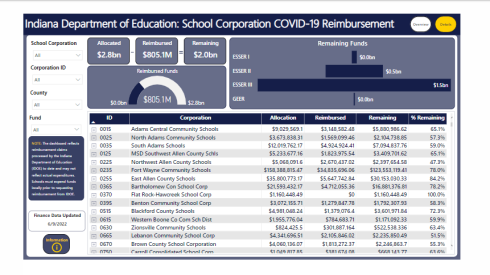
Developers of the newly updated website say it will provide more transparency on how the state’s school districts are spending COVID-19 relief funds, and eventually how it relates to student outcomes.
-
A Monday panel at the ISTELive 22 Conference in New Orleans revealed how a coalition with the Council of Chief State School Officers and the Council of the Great City Schools is assessing ed-tech products and systems.
-
Kimberly Carlson, an innovation specialist at Lakota Local School District in Ohio, was named one of America's "20 Teachers To Watch" by ISTE for modernizing classrooms, such as with free laptops and a Cyber Academy.
-
A Texas school district this fall will implement the Raptor Alert System, which comes with a downloadable app that synchronizes responding entities with a website that manages the flow of K-12 district information.
-
Some teacher preparation programs aren't keeping pace with technological changes in schools, neglecting to train new teachers for modern classrooms, 1-to-1 computing environments, popular devices and software tools.
-
Students and administrators say digital streaming platforms, referrals and college recruitment test tournaments have made organized video game competitions among the fastest-growing extracurriculars in Iowa.
-
A pivot to online tools over the past two years helped an Irving, Calif.-based company that allows entrepreneurs to build and sell educational content to increase its annual revenue by 250 percent.
-
The New York City Department of Education's "A School Without Walls" program includes a hybrid option which blends in-person and remote learning, and a virtual option with daily synchronous lessons in STEM or humanities.
-
The Boston-based startup accelerator has chosen five startups — four from the U.S. and one from Austria — for its 12-week Breakthrough to Scale program, and many of them propose tech solutions to workforce training.
-
The U.S. Department of Education awarded a $121.8 million contract to General Dynamics Information Technology to build a new Award Eligibility Determination system, moving it from the mainframe to the cloud.
-
The academy was established in 2009 by the Montana state Legislature to provide credit recovery and supplemental online courses, primarily for grades 5-12, in subjects that weren't offered in rural school districts.
-
In a Thursday panel at the Learning Impact Conference in Nashville, tech executives and higher ed officials discussed ways to help connect students to careers through programming and credential sharing.
-
The Virginia-based wireless software and hardware company is deploying its private 5G platform on Google Distributed Cloud Edge, potentially lowering costs for schools to build and maintain their own wireless networks.