
-
 Overburdened administrators are relying on artificial intelligence tools to handle mandatory teacher evaluations, but some educators have concerns about risks, readiness and oversight.
 -
Simulation platforms like BranchED are emerging as a modality for teacher training, using avatars and large language models to replicate student behavior and give teachers practice dealing with classroom situations.
-
Set to open this fall, the Reading Innovation Academy is structured around specific pathways like engineering and design, computer science and IT, health and biomedical sciences, and STEM-focused human services.


More Stories
-
In answer to budgetary and enrollment woes, Louisiana is looking at whether to consolidate some of its universities or refocus their programs on industry-aligned programs in fields like cybersecurity and pharmaceuticals.
-
Several student-created entrepreneurship initiatives have cropped up in recent years, and their members are being flown around the world, wined and dined, and written no-questions-asked checks by established VC firms.
-
Free, teacher-vetted lessons offered online by the nonprofit CYBER.ORG are designed to support and re-establish the caregiver’s role as an active participant in a student’s tech-driven education.
-
A recent conversation with the senior associate director of AI and teaching and learning at Northeastern University yielded advice about engaging students, upgrading lessons, trial and error, and helpful feedback.
-
Starting this spring, a new state test called the New Jersey Student Learning Assessments-Adaptive for grades 3-10 will be “adaptive,” meaning students will get different questions based on their previous answers.
-
Superintendent of Schools Michele Blatt cautioned against regulations that could quickly become outdated, as the West Virginia Department of Education has already revised its AI guidelines twice since January 2024.
-
As artificial intelligence and digital tools continually reshape their coursework, students say common frustrations include a lack of clear AI guidance, an overabundance of tools and apps, and Wi-Fi connectivity issues.
-
A multiyear initiative between a private historically Black liberal arts college and a tech company will expose up to 750 high school students in the Birmingham area to AI technology and workforce opportunities.
-
HISD will convert Gregg and Clemente Martinez elemantaries into "Future 2 Schools," serving students from kindergarten through eighth grade and focused on skills needed with the rise of artificial intelligence.
-
The tutoring and college-prep company Studyville Enterprises is nearly quadrupling its staff in the next five years and further developing its tutoring performance tracking and literacy software.
-
Odyssey CEO Joseph Connor, whose company is building infrastructure for the nation’s largest ESA rollout, says vetting local vendors is key to helping states and families make the most of digital wallets.
-
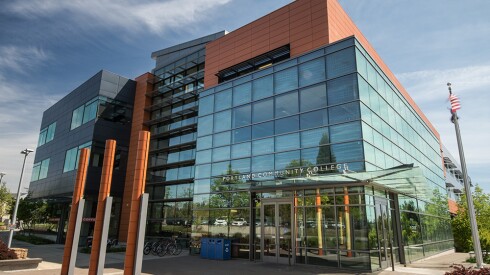
A new facility at Portland Community College is helping students practice specialized manufacturing skills and cleanroom protocols using equipment that simulates a real manufacturing environment.
-
A collaboration between Carnegie Mellon University’s CREATE Lab, the STEM Coding Lab and the Valley School of Ligonier will teach elementary students about AI’s ethical and societal implications.
-
North Kansas City School District is cooperating with law enforcement after an audit found a district IT employee approved invoices for a vendor owned by his brother, without following procurement requirements.
-
A Colorado school district has blocked access to ChatGPT on district-issued devices, in light of the chatbot's easily skirted age verification process, opaque group chats and ability to generate explicit materials.
-
A ruling by the Board of the California Privacy Protection Agency serves as a warning to ed-tech and school-service vendors that digital access to school life cannot be contingent upon being tracked for advertising.
-
With funding from the state and The Delta Air Lines Foundation, the Georgia Institute of Technology will revamp its aerospace engineering facility to include advanced labs and research spaces for emerging technologies.
-
The up-and-coming generation of teachers who grew up with technology try to integrate it thoughtfully into lessons, though some are not used to separating their digital lives from their professional lives.




Most Read








