
-
 ADA Title II regulations mandate enhanced accessibility for mobile and web content from government entities, including public education institutions, as soon as 2026. Advocates suggest focusing on progress over deadlines.
 -
Punitive, fear-driven approaches to rule-making about artificial intelligence in higher education can deepen mistrust, stress and disconnection among students. Alternatively, there are opportunities for teachable moments.
-
As higher education re-evaluates student success in the post-pandemic era of AI and hybrid learning, technology leaders say their focus must shift from transactional systems to student-centered design and personalization.


More Stories
-
The American Council on Education and 17 other education groups pressed the Federal Communications Commission to ensure Internet service providers can't throttle connection speeds or prices for particular content.
-
Given the scale of cyber threats against universities today and the number of digital tools they depend upon, IT leaders should prioritize working with vendors that are reliable, proactive and responsive to such threats.
-
With more students using artificial intelligence for a variety of functions, it will be important to teach critical-thinking skills and encourage hands-on learning — especially in tech fields.
-
A recent Educause survey found institutions have been increasing their investments in cybersecurity positions, while little is going toward adding positions dedicated to privacy issues.
-
Several higher-ed leaders on Tuesday stressed the importance of data privacy, particularly now in the age of ubiquitous digital tools and data management initiatives, as universities collect more data to make decisions.
-
As teachers integrate generative artificial intelligence into lesson plans and subjects, doing so responsibly will mean teaching about the limitations and biases of such tools, and discouraging over-reliance on them.
-
Administrators say colleges and universities can improve data-informed decision-making, and potentially help struggling students, by creating a centralized data system for their institution.
-
College and university IT departments are busier than ever accommodating the shift to hybrid learning models, putting pressure on CISOs and their staff to strengthen cybersecurity without ballooning costs.
-
The Digital Footprints Project at West Virginia University shows the potential for institutional data about student engagement, performance and other metrics to enable early intervention strategies.
-
Educators from Stanford University shared lessons from their campus’ overall experiences with remote learning, including student struggles and academic innovations, at the virtual Educause Annual Conference last week.
-
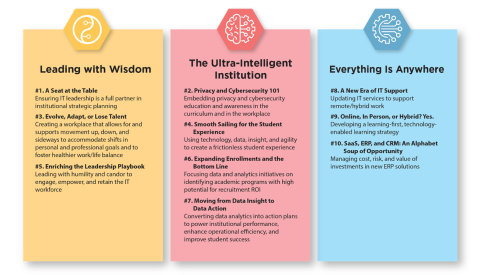
Making sure CIOs have a seat at the leadership table and reducing staff turnover are both key IT challenges in higher education today, according to the ed-tech advocacy organization Educause at its annual conference.
-
Higher ed’s complex array of systems creates a large attack surface, and institutions are likely to pay ransom. Meanwhile, K-12 schools struggle with cyber staffing but more often resist extortion, a global report finds.



Most Read








