
-
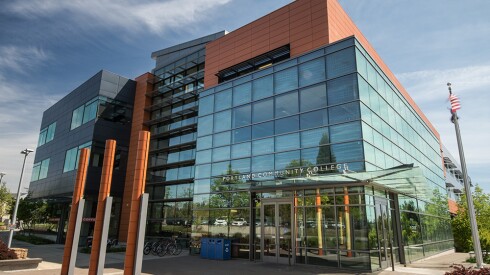
 A new facility at Portland Community College is helping students practice specialized manufacturing skills and cleanroom protocols using equipment that simulates a real manufacturing environment.
 -
With funding from the state and The Delta Air Lines Foundation, the Georgia Institute of Technology will revamp its aerospace engineering facility to include advanced labs and research spaces for emerging technologies.
-
The AI Center for Civic and Social Good will let the public and the San Jose State University community learn about and work with AI technology through programming — at no cost to participants.


More Stories
-
A new document from the nonprofit Complete College America highlights how three universities are innovating teaching and learning with artificial intelligence through scalable initiatives.
-
Purpose-built AI learning platforms that don’t give students the answer, as opposed to tools that allow for direct answer generation like ChatGPT, are the way to avoid making students utterly dependent upon AI.
-
Colleges and universities know they need to get students comfortable with using artificial intelligence tools, but discussions should focus more on people and pedagogy than rules, regulations and specific brands.
-
The 900-page federal bill is expected to promote private schools at the expense of public ones, reduce student loan options and food assistance, cut into school budgets and heavily tax private university endowments.
-
Illinois Tech and St. Cloud State have partnered with Risepoint to meet prospective students where they are and provide online degree programs in fields such as business analytics, finance and project management.
-
The 2026-27 Ohio budget mandates that K-12 districts create policies to govern the use of artificial intelligence and cellphones, and offers a handful of $100,000 grants to community colleges for implementing AI.
-
Supporting cutting-edge research at colleges and universities — even, or especially, in its earliest stages, before anyone can know for sure what will come of it — has been paying dividends for society for generations.
-
Projects announced at the Pennsylvania Energy and Innovation Summit at Carnegie Mellon University this week included new workforce training programs as well as cybersecurity education for middle and high schoolers.
-
AI models are trained to optimize outputs, but in educating children, the process is the point. If we assess children only in terms of what can be “trained,” we repeat the mistake of emphasizing output over experience.
-
Funded by a grant from the Department of Defense, a cybersecurity camp in Texas allows students to take part in exercises that teach them about network security, the latest cybersecurity technologies and ethical hacking.
-
The federal government gutting university research funding reverses tradition that has served the U.S. well since World War II, and it's especially senseless in the face of AI, cybersecurity, nuclear and other technologies.
-
High school participants in the New York Power Authority’s first paid cybersecurity fellowship program this summer received hands-on training and experience in cybersecurity in preparation for CompTIA A+ certification.
-
Former University of Pennsylvania tech leader Rob Nelson said small, cross-functional teams, local experimentation and faculty-centered support can unlock meaningful innovation in applications of AI.
-
Microsoft Elevate, which the company describes as a successor and expansion of the longtime Microsoft Philanthropies team, will devote resources to helping more than 20 million people earn AI credentials.
-
Brad Ives, executive director of Louisiana State University's Institute for Energy Innovation, says the One Big Beautiful Bill Act will make the U.S. less competitive, but it won't stop the global trend toward renewables.
-
Federal legislation signed into law this month rewrites student loan and grant policy with the goal of frugality, with critics warning it may push students toward loans and programs with fewer protections.
-
The capacity of learning analytics platforms to collect troves of student data makes them both institutional necessities and liabilities. A handful of best practices can help colleges and universities keep them secure.
-
A 2023 indictment unsealed this week alleges that two men were directed by China's spy agency to target and access the emails of virologists and immunologists at two Houston-area universities.


Most Read

- Q&A: Tech and Policy Intersect in Education Savings Accounts
- Nevada Governor’s Tech Office Gets a Redesigned Website
- How quickly can BYD’s newest vehicle battery recharge?
- Data-Driven Safety: West Manatee Fire and Rescue’s STR Strategy Saves Lives and Boosts Revenue
- What’s New in Digital Equity: 30 Years of the Telecom Act







