
-
 As artificial intelligence and digital tools continually reshape their coursework, students say common frustrations include a lack of clear AI guidance, an overabundance of tools and apps, and Wi-Fi connectivity issues.
 -
A multiyear initiative between a private historically Black liberal arts college and a tech company will expose up to 750 high school students in the Birmingham area to AI technology and workforce opportunities.
-
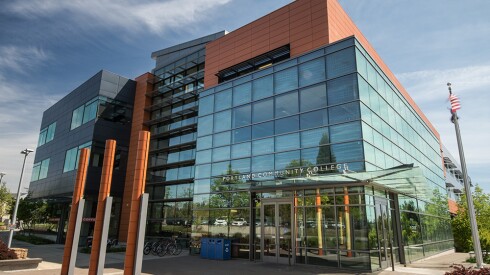
A new facility at Portland Community College is helping students practice specialized manufacturing skills and cleanroom protocols using equipment that simulates a real manufacturing environment.


More Stories
-
On top of worries about enrollment, data security and staffing, new policies and scrutiny on higher education from the federal government have made risk audits and strategic planning more urgent than ever.
-
Gov. Patrick Morrisey announced in his State of the State address last week a collaboration between four higher education institutions to make the state a major supplier of energy for emerging technologies.
-
A collaborative program between Missoula College and the University of Montana's College of Business focuses cybersecurity studies on business operations and what principles keep their systems secure.
-
One of the first such positions in the U.S., SJSU's AI librarian will manage digital assets, develop technology resources and promote services related to artificial intelligence at the university's academic library.
-
A nearly 25,000-square-foot addition to the university's Transportation Research Institute will include three battery laboratories, auxiliary support areas, a substation and a facility for battery cell abuse testing.
-
Leaders at Adobe, NVIDIA and Intel share their aspirations and intentions for a recently announced partnership for AI education and workforce development through the California State University System.
-
A planned bioprocessing and industrial innovation center at Kansas State University will allow researchers and corporate partners to develop pilot-scale countermeasures for a broad range of emerging zoonotic diseases.
-
Using student population data on factors like age, sex, years in school, race and ethnicity, researchers used artificial intelligence to help counselors understand which groups might benefit from additional resources.
-
A professor's video for her African American studies course at North Carolina Agricultural and Technical State University inspired a hashtag that became a repository for educational content from other Black creators.
-
Through Columbus State University's partnership with the new Maneuver Innovation Lab at Fort Moore, Georgia, robotics and engineering students have the opportunity to research and develop new technology.
-
A new large language model out of China purports to exceed ChatGPT's reasoning powers at a fraction of the cost. This reinforces artificial intelligence as the key technological frontier for education and other sectors.
-
Cal State’s deputy vice-chancellor of academic and student affairs, its chief information officer, and a San Francisco State University anthropology professor take different stances on a $16.9 million AI initiative.
-
New laws in California and the European Union that promote AI literacy both emphasize that it's not just about technical knowledge, but also critical thinking skills to assess AI’s appropriate use in different contexts.
-
Artificial intelligence can help grant applicants identify which funds best match a project, generate drafts of persuasive text, ensure necessary criteria are met, and aggregate data to follow up with funders.
-
A private university in Michigan will use a gift from Windrose Technology to expand its sustainability initiatives, including hosting guest speakers, organizing conferences and fostering industry partnerships.
-
Hoping to avoid name mispronunciations that had marred many students' experiences in past ceremonies, West Chester contracted with Tassel for professionally recorded announcements, but some students objected.
-
The University of Maine, the Maine College of Art & Design, Husson University and the University of New England are expanding their online offerings amid growing demand for flexibility and degree-completion programs.
-
The Minneapolis City Council is taking a second look at its decision last year to allow sidewalk delivery robots at the University of Minnesota. The city is researching their impact on the university and workers.









