-
 As artificial intelligence and digital tools continually reshape their coursework, students say common frustrations include a lack of clear AI guidance, an overabundance of tools and apps, and Wi-Fi connectivity issues.
 -
A multiyear initiative between a private historically Black liberal arts college and a tech company will expose up to 750 high school students in the Birmingham area to AI technology and workforce opportunities.
-
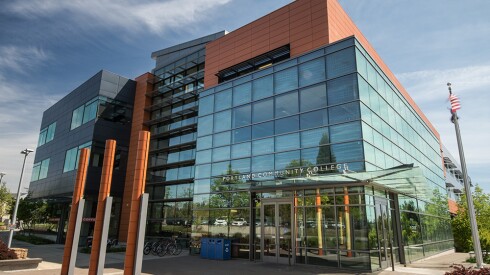
A new facility at Portland Community College is helping students practice specialized manufacturing skills and cleanroom protocols using equipment that simulates a real manufacturing environment.


More Stories
-
Some studies have been quashed and others already underway could be in jeopardy. Nationwide health data sets also disappeared from the web pages of the U.S. CDC, with some reappearing with missing information.
-
In its first year, a federally funded program through Miami Dade College trained 675 students at universities or boot camps, and 315 of those have since found jobs with salaries $66,000 or more.
-
In collaboration with Instructure, Alphabet, Nvidia, Intel, AWS, Microsoft, OpenAI and others, the California State University system is to roll out AI tools and training to all students, faculty and staff.
-
The Texas Cyber Command would work closely with state agencies, universities and Regional Security Operation Centers to improve cybersecurity. Gov. Greg Abbott announced it during his State of the State address Sunday.
-
The university will be the first in the country to house commercial-scale nuclear reactors. State and industry leaders noted the increasing demand for electricity amid the rise of AI and other energy-intensive technologies.
-
Through a contribution from AT&T, a private Christian university in Grand Rapids, Mich., has received $50,000 to supply laptops to students who are facing financial barriers to higher education.
-
A new rubric from the nonprofit Opportunity Labs provides nine principles and a step-by-step system to evaluate the safety and potential usefulness of generative artificial intelligence-based tools for education.
-
The 2025 Chegg Global Student Survey shows AI usage is up, but trust is down. There's also broad interest in online classes, as 70 percent of students say they would prefer more online options if it meant lower tuition.
-
Through a partnership with CyberProAI, Ivy Tech Community College in Indiana will enhance its cybersecurity certification program with new technology, labs and a military-grade cyber range.
-
Collaboration between the state, the University of Vermont and private semiconductor businesses will include K-12 and adult education initiatives to promote local development of semiconductors made with gallium nitride.
-
Some students at the University of Texas at El Paso lost financial aid funds as a result of a targeted phishing email campaign. The university is offering an emergency fund to help those impacted.
-
A private university in Springfield, Mass., opened an extended reality lab in its library with headsets not just for study in the hard sciences, but also communications, marketing and psychology.
-
The pace of innovation in fields such as artificial intelligence and cybersecurity has made it more imperative than ever for colleges and universities to tailor their programs to the needs of emerging tech industries.
-
A public university in Minnesota will launch a new computer science program with options for online courses and three specialties in design, web design and user experience, or 3D design and user experience.
-
A liberal arts college in Maine created Mule Chat, which gives users access to four major large language models. The college also trained student tutors to help students and faculty build AI skills.
-
Chippewa Valley Technical College expects the use of two new online textbooks, which are free to access and adaptable by instructors, to save students hundreds of thousands of dollars annually.
-
A community college in Nebraska worked with the city of Lincoln and a local technology services company on a 65,000-square-foot facility with classrooms, specialized lab spaces, a data center and a cybersecurity center.
-
An early advocate for the potential of artificial intelligence, Louisiana State University business professor Andrew Schwarz says the state needs to invest heavily in both traditional and adult education.