
-
 As artificial intelligence and digital tools continually reshape their coursework, students say common frustrations include a lack of clear AI guidance, an overabundance of tools and apps, and Wi-Fi connectivity issues.
 -
A multiyear initiative between a private historically Black liberal arts college and a tech company will expose up to 750 high school students in the Birmingham area to AI technology and workforce opportunities.
-
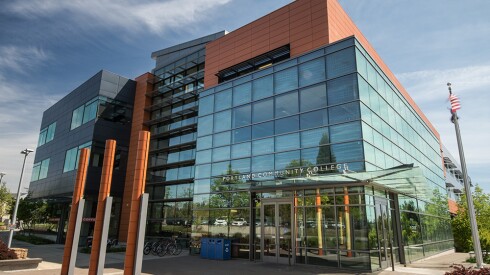
A new facility at Portland Community College is helping students practice specialized manufacturing skills and cleanroom protocols using equipment that simulates a real manufacturing environment.


More Stories
-
The University of Maine's "Factory of the Future," a new 50,000-square-foot Green Engineering and Materials building, focuses on housing, renewable energy and infrastructure, national defense and boat building.
-
A private Catholic university in Texas may be on the hook for millions of dollars because of class-action lawsuit over a 2022 data breach that compromised personal information of tens of thousands of students and staff.
-
Central Connecticut State University is the first university in the U.S. to work with AI companies on developing a holographic synthetic human, and the first to integrate it alongside students and faculty.
-
A panel of experts at the annual EDUCAUSE conference discussed why data and analytics, and ultimately chief information officers, are growing more important to the future of higher education.
-
A new data-sharing agreement between the Sacramento Office of Education, Elk Grove Unified School District and several local colleges aims to deliver actionable insights for boosting enrollment and graduation rates.
-
Pennsylvania State University is the new home of the U.S. Supreme Court Database, a public, searchable repository of the 30,000 cases that have been decided by the court since 1791.
-
Cyber insurance is one way to protect institutions when something goes wrong in their digital infrastructure, but acquiring and implementing it will look different depending on organizational structure and priorities.
-
In the face of rapidly accelerating technological change, a private-sector expert at the EDUCAUSE national conference last week suggested that institutions embrace becoming technology-first enterprises.
-
Between its new $6.2 million 17-acre solar array to power campus buildings and the electricity it gets from hydropower from the New York Power Authority, Niagara University's carbon footprint is net zero.
-
Academic publisher Wiley has partnered with ed-tech company Alchemie to reduce barriers for blind and low-vision students to the field of chemistry, which relies heavily on visual representations of matter.
-
The University of California, Santa Cruz, will use a National Science Foundation grant to redesign support and mentoring programs to better serve students from marginalized backgrounds.
-
The University of Michigan devoted considerable resources to proprietary generative AI tools. Next month it will launch a public-facing chatbot to connect prospective college students with funding opportunities.
-
A public community college in Illinois hosted a group of small business owners and local manufacturers last week to show off its Advanced Technology Center as an essential part of the regional economy's talent pipeline.
-
Resources from the U.S. Department of Education's Office of Educational Technology on generative AI include a guide to teaching and learning, the national ed-tech plan, an ed-tech developer's guide and more.
-
The 2025 EDUCAUSE Top 10 list, a snapshot of top priorities in higher education, focuses on earning back trust through technology and data. Several indicators show faith in the value of higher ed and the integrity of tech companies is declining.
-
The university did not admit any wrongdoing and no determination of liability has resulted from the suit. It had been accused of failing to comply with cybersecurity requirements in contracts or subcontracts involving the U.S. Defense Department or NASA.
-
This is the third consecutive year Rose-Hulman Institute of Technology in Terre Haute, Ind., has been honored as one of America’s best “Green” colleges. The Princeton Review cites Rose-Hulman in the 2025 edition of the Guide to Green Colleges.
-
IT directors and cybersecurity professionals in ed tech are no strangers to burnout, and neither are their counterparts in student success. But technology and teamwork may be able to relieve some of that pressure, leaders said at the 2024 EDUCAUSE Annual Conference.









