
-
 The City Council approved a 60-day police department trial of bodycam software that uses AI to analyze video. It will automate the review and categorization of footage and evaluate officer performance on calls.
 -
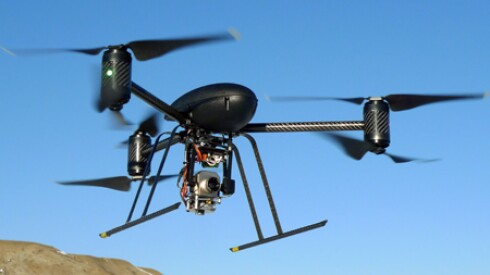
County commissioners approved a contract that will begin with a free nine-month pilot, but could extend to a three-year, $2.5 million pact. Residents voiced a variety of concerns about the drone program.
-
The extent of the data breach is still unclear, and city officials have said they are investigating to find out what was taken, who was responsible and how the city’s cybersecurity was compromised.


More Stories
-
Chief Jim McDonnell voiced concern about the perception of disorder — and the reality that crimes are going unreported because some believe nothing will be done to investigate.
-
Earlier this year, a software engineer based in Huntsville, Ala., launched DeFlock, an online map where users can plot automated license plate readers in their cities as part of an effort related to privacy awareness.
-
Election officials and law enforcement worked together to fend off Election Day threats, with a new tactic emerging: hoax bomb threats made against polling sites with the aim to disrupt voting.
-
Parents are suing Lancaster Country Day School, a private preparatory school in Pennsylvania, over its alleged failure to report or take corrective action in response to AI-generated deepfakes of over 50 students.
-
Four local fire departments in northern Massachusetts will share more than $600,000 in federal grants, money which will help bring in new tech and potentially faster response times for each station.
-
The Drone as First Responder program, piloted earlier this year, is now operational in five command areas of the New York City Police Department. The devices are intended to assist police in responding to shots-fired calls, robberies and other crimes.
-
As part of its NG911 efforts, the state can now fix the location of mobile phone calls to within three feet. Emergency calls from landlines also are getting better in a project that could offer lessons for others.
-
Newark Mayor Ras J. Baraka named his fourth public safety director in eight years, choosing a longtime city police officer and chief to replace an outsider who resigned last week two years after being hired.
-
While Houston firefighter deaths in the line of duty are rare, there has always been an effort to memorialize those that have lost their lives while responding to fires.
-
The sheriff in the state’s most populous county hopes lawmakers can be persuaded to let authorities deploy traffic cameras to tamp down speeding and running red lights — and reduce fatal and injury crashes.
-
ForceMetrics co-founder and CEO Andre McGregor addresses the need for real-time, actionable insights into critical risks for first responders to make them safer and more effective.
-
Spurred by public demand for school safety after the Uvalde shooting that killed 19 people, the broadband company Wytec International is developing AI-powered sensors to pinpoint nearby gunshots and notify authorities.
-
The wildfire broke out late Friday on Neversink Mountain near the outskirts of Reading, giving rise to a fast-spreading blaze driven by dry conditions and intensified by gusts of wind that peaked at 35 mph.
-
The pair has been accused by an Eastern Washington state grand jury of conspiring to smuggle devices to override truck emissions controls into central Washington, and selling them online for $74 million. The men face allegations including smuggling.
-
The conference is for all first responders, including police, fire, emergency medical services, dispatchers, corrections, coroners, chaplains, spouses, professional staff and other public safety personnel.
-
About 660 gallons of diesel fuel spilled near the Columbia River south of Wallula after a Union Pacific train derailed overnight on Wednesday. Containment efforts are currently underway.
-
With a question-and-answer video on the Woodland, Calif., police department’s Facebook, Chief Ryan Kinnan discussed community policing, including advancements in tech and building trust with residents.
-
Louisiana Attorney General Liz Murrill's office has signed a multimillion-dollar deal with a security consulting firm that aims to harness technology to bolster criminal prosecutions inside the state.







Most Read

- Virtual Learning Boomed, but Now States Struggle to Govern It
- Yuma County, Ariz.’s New CIO Hails From the City of Yuma
- Funding California IT Like Other Types of Infrastructure
- Is there a bike bell that you can hear even with noise-canceling headphones?
- Terra Dotta Helps CSULA With Exchange Student Data Compliance







