
Civic Innovation
-
 The myAurora 311 Open Data Portal gives residents a detailed look at the city's non-emergency call traffic, service trends and response, and is part of a broader push to make city operations more transparent.
 -
Officials will refresh the site to eliminate customer issues including a delayed reflecting of precise balances. Changes to the village payment system are underway, and are in early stages.
-
The AI Center for Civic and Social Good will let the public and the San Jose State University community learn about and work with AI technology through programming — at no cost to participants.


More Stories
-
Plus, Cuyahoga County, Ohio, approves funding for a full-time digital inclusion staffer; Chicago launches a new data portal that details developer compliance with affordable housing rules; and more!
-
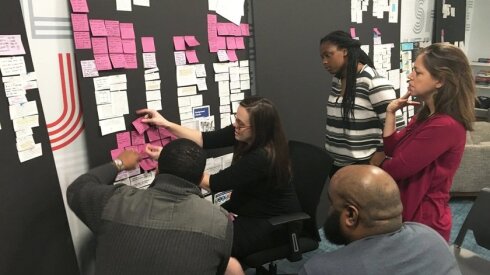
Stakeholders both inside and outside of the federal agency attended a recent demo day at the bureau's headquarters, discussing the roll that data maps, human-centric design and more will play in next year’s count.
-
OhioX is currently working on community building and promotion for its work, with a goal of attracting members to the network and ultimately sharing innovators’ stories throughout the state.
-
The New York-based urban tech startup accelerator has announced seven more companies to which it will give financing and consultation in the hope that investors, come April 2020, will like what they see.
-
Transportation infrastructure, water and sewer systems, clean energy and data policy are among the recommended focus areas on the just-released 2020 policy agenda of the U.S. Conference of Mayors.
-
Plus, the CA.gov redesign is now underway; new tools created to help address online misinformation; Census State Data Centers are offering localized training resources for community groups; and more!
-
By tapping human-centered design principles, the i-Team in Durham, N.C., has helped the district attorney remove 51,000 charges for 35,000 individuals, many of whom were facing restricted driving privileges.
-
Students at Carencro High in Louisiana are helping to catalog litter around Lafayette Parish by using a new survey app that allows them to upload their findings into an interactive storytelling platform.
-
Plus, New Yorkers are battling bad landlords with open data; the Hard to Count Census map has added new contact strategy data; a grant from the Knight Foundation seeks data for civic engagement stories; and more.
-
The Louisiana Department of Health has partnered with vendor MAXIMUS to streamline Medicaid enrollment, creating the Healthy Louisiana app. Eligible residents can use the app to compare health-care plans and find doctors.
-
A Charlotte nonprofit is working on creating a Web tool that will map all food sources in a multicounty region, hoping to create a resource for locating local markets, community gardens, farms and more.
-
Speaking at the NASCIO conference last month, Wisconsin CIO David Cagigal talked about the data analytics work the state will undertake when it gets past its current state of being “data rich and information poor.”
-
Nearly half of the people released from prison in North Carolina are arrested again within two years of re-entering society — a troubling statistic that the state is trying to chip away at with new technology.
-
After the successful creation of a new city website built with sophisticated human-centered design methodology, City Hall is now looking to apply the lessons learned to other projects across agencies.
-
As an increasing number of cities nationwide work to foster equitable outcomes for residents, Albuquerque has created a new case study for how data can be used in various ways to lift populations up.
-
Plus, Sidewalk Labs shares its Digital Innovation Appendix; Minnesota rolls out a plan to reduce bench warrants via text; Miami shows off new website upgrades; Pittsburgh uses innovation to support the Census; and more!
-
Mayor Kevin Faulconer appointed Andrell Bower as the city's new chief data officer, a position that has remained vacant since July. Bower is charged with evaluating new tech to streamline government processes.
-
A Vermont Code for America brigade, Code for BTV, designed a Google Chrome extension to scrape data from criminal dockets found on the state's legacy court database to autofill expungement and record sealing petitions.




Most Read

- Is Federal Education Research Keeping Up With the Digital Age?
- Minnesota Elevates Interim CIO Jon Eichten to Permanent
- Agentic AI Platform to Personalize Pharmacy Education at CNU
- How much did a Florida man save by selling his home with ChatGPT?
- 5 Pillars of Building a State Quantum Computing Program







