

Preparing K-12 and higher education IT leaders for the exponential era
Education News
-
 Odyssey CEO Joseph Connor, whose company is building infrastructure for the nation’s largest ESA rollout, says vetting local vendors is key to helping states and families make the most of digital wallets.
 -
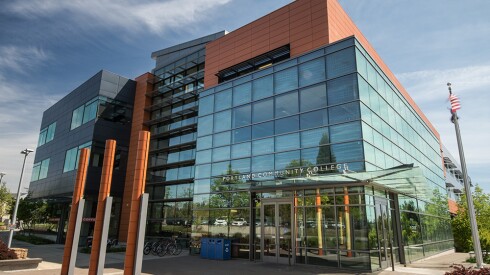
A new facility at Portland Community College is helping students practice specialized manufacturing skills and cleanroom protocols using equipment that simulates a real manufacturing environment.
-
A collaboration between Carnegie Mellon University’s CREATE Lab, the STEM Coding Lab and the Valley School of Ligonier will teach elementary students about AI’s ethical and societal implications.



The CDG/CDE AWS Champions Awards honor AWS customers who are setting new standards for innovation in the public sector.
More Stories
-
Major growth and investment by major companies in emerging technologies such as artificial intelligence, along with the federal government's new stake in Intel, could affect institutional decision-making.
-
Austin Public Schools in Minnesota launched a technology advisory committee, started training staff on how AI works and when it's useful, and partnered with Common Sense Media to teach students best practices.
-
The Cube, a new 5,000-square foot facility with advanced classrooms and technology resources for STEM education, is the first new building constructed for Flint Community Schools in over 50 years.
-
Jay Martin, director of School Safety & Security for the Nebraska Department of Education, warns that kids are learning cultural norms from social media instead of parents or their peers.
-
The university's collaboration with Sony Electronics brings professional technology, cloud production tools and mentorship opportunities to Syracuse communications students.
-
The TECH Mobile Initiative project will provide approximately 800 students at high schools and career centers with STEM education, training and credentials tailored to specific career pathways.
-
Education officials say Missouri's statewide cellphone ban at public and charter schools has brought consistency, focus and more social interaction. Some students agree, while others say they feel bored or limited.
-
Supported by a Wisconsin Fast Forward grant, a student-run business at Superior High School uses metal fabrication and manufacturing equipment to produce items for businesses and community members.
-
Scientists and students at the University of Colorado Boulder developed an AI tool to analyze and detect predatory, illegitimate scientific journals that post anything and do not adhere to the peer review process.
-
Students enrolled in the Granite State Academy Online Program, an alternative program of Prospect Mountain High School hosted by the online education company K12, will begin instruction Sept. 19.
-
The AI company Anthropic has convened two former university presidents, three campus technology leaders and the president of an education nonprofit for an advisory group to inform the company's education-focused tools.
-
According to officials at a public university in Alabama, working with local industry and workforce partners in high-demand fields such as computer science and cybersecurity has helped drive enrollment growth.
-
A public school district in the Metro Detroit area went offline and suspended classes on Monday and Tuesday while it investigates a network interruption and attempts to restore its systems.
-
Three years after an audit recommended cybersecurity improvements at Starpoint Central School District, the New York State Education Department and State Comptroller’s Office followed up and came to different conclusions.
-
The latest annual report by the State Educational Technology Directors Association highlights AI’s growth alongside gaps in funding, teacher support and cybersecurity.
-
OpenAI, the parent company of ChatGPT, says it will roll out parental controls in October. When that happens, school officials such as family coordinators may be needed to help parents understand and use them.
-
Professors at Central Connecticut State University worry that reliance on artificial intelligence tools is already changing student behavior — less thinking abstractly, less engagement and potential cognitive decline.
-
Uvalde Consolidated Independent School District is closed for most of this week while it investigates and recovers from a ransomware attack that disrupted multiple online systems.


Education Events
June 5, 2025
June 11, 2025
September 29, 2025
September 2025
September 2025
October 2025
October 21, 2025
November 20, 2025
November 2025
December 4-5, 2025
Maryland K-12 AI Leadership Conference
December 2025







