Preparedness and Communications
Latest Stories
-
 The Oregon Department of Emergency Management is hosting free webinars this spring for anyone interested in helping rural communities prepare for and respond to disasters such as floods, extreme heat and wildfires.
 -
Coming on the heels of unanswered 911 calls, the improvements are part of a $39.2 million contract that the City Council voted on last year. The work will allow Jersey City to take part in a statewide 911 upgrade.


More Stories
-
The free app, which was once banned as the Vigilante app by the Apple App Store, now calls a former foe its spokesman and boasts citizen heroics as evidence of its viability.
-
 In this worst-case scenario, an EF-5 tornado like the one that struck El Reno, Okla., in 2013 would have 94,500 people and buildings worth more than $4 billion in its path. Some storm experts think it’s inevitable.
 -
Pima County, Ariz., Valley Emergency Communication Center prepares to introduce its Computer Aided Dispatch system to the cloud in a pilot project this spring.
-
Eddy County Emergency Manager Jennifer Armendariz said video footage confirmed that the tornado touched down at about 5 p.m. in Loving in southern Eddy County. She said no damage was reported.
-
'The Emergency Outdoor Warning Sirens have malfunctioned and are automatically sounding. We are currently working to address the concern …' read a post on the city of Lancaster’s Nextdoor page.
-
A team of U.S. Geological Survey scientists concluded that even a modest amount of sea level rise — often dismissed as a creeping, slow-moving disaster — could overwhelm communities when a storm hits at the same time.
-
'Recruitment and retention there is a problem for us and it’s a problem nation-wide. It’s not unique to Oskaloosa. It is a commitment.'
-
The Massachusetts Task Force Report on School Safety and Security’s recommendations to the governor state that the lockdown method, which includes students hiding under desks or against walls, is no longer a stand-alone strategy to secure in place during an active shooter threat.
-
State law requires that Madison County consolidate the number of 911 call centers, or Public Service Answering Points, by at least half. Under a plan approved by the Emergency Telephone System Board the number of PSAPs would have been reduced to eight from 16.
-
The FEMA funds will help build three tornado safe rooms capable of sheltering a total of more than 2,250 people combined.
-
Keynote speaker addresses the ‘fire hose’ of information that flows to dispatch during an incident and how curative technology will synthesize the information, calling out what’s relevant and timely.
-
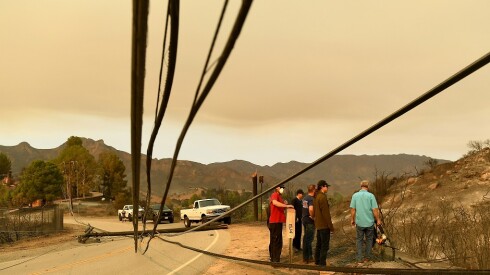
But judge decides PG&E's main focus will primarily be tree-trimming, not inspecting its power grid.
-
Next Gen TV, or Advanced Television Systems Committee standard, has the potential to enhance communication for EMS and fire agencies still reliant on 60-year-old technology.
-
Californians are going to pay, one way or another, to adapt to mounting fire risks. How we adapt will depend in part on how the bill is split, which makes this a first-order policy problem.
-
Efforts over the last two decades to prepare communities for disasters have failed and new methodologies need to be developed, according to research by FEMA’s Higher Education Program.