
Health & Human Services
-
 Multiple hospitals in rural Minnesota are reporting that Medicare is incorrectly rejecting claims for patient care due to a problem that appears to be related to a system put in place last year.
 -
The state is modernizing a legacy mainframe, working with federal counterparts and participating in the Child Welfare Technology Incubator initiative from the Administration for Children and Families.
-
The hand-held, artificial intelligence-enabled electrocardiogram, or ECG for short, has the ability to process the data as well as the larger machines that the paramedics have in their toolbox.


More Stories
-
The state’s new Disability Information Hub offers information about state programs, resources and assistance for people with disabilities. Their input helped guide its development and design.
-
New legislation requires that all public and private schools in Ohio carry automated external defibrillators, which can help prevent student athletes from dying of sudden cardiac arrest.
-
Announced Monday, the Foodborne Illness Notification System from the Washington Department of Health is an online platform residents can use to notify authorities about illness or food safety concerns.
-
Illinois has partnered with Google to launch a groundbreaking portal, aiming to streamline access to youth mental health services and break down agency silos. A project leader shared with Government Technology what they’ve learned in the process.
-
Heritage Valley Health System will pay the federal government $950,000 to settle potential patient privacy violations after a ransomware attack in 2017 crippled the system's electronic medical records system.
-
Legislation expanding access to telemedicine in Pennsylvania received final Senate approval and is now set to be signed into law by Gov. Josh Shapiro, Sen. Lisa Baker said Thursday.
-
Researchers will be comparing these measurements with those from an instrument on a commercial satellite last year that provided hourly daytime measurements of air pollution across North America.
-
The pandemic sparked billions of dollars worth of fraud in unemployment and other areas. Now the federal agency and its partners want to find ways to reduce crime while also easing access for people who need assistance.
-
Technology like mobile apps and data visualization dashboards is helping the state serve more of its residents — often without them having to leave their homes.
-
The Cuyahoga County Overdose Prevention App is designed to keep drug users safe by connecting them to someone who can stay in contact until they’re out of danger of overdosing. It was developed through a state opioid response grant.
-
Managing your 401k accounts — even across multiple workplaces — could be about as simple as ordering takeout food if a new federal government recommendation gets the green light.
-
California launched two apps at the start of the year offering free behavioral health services to youths to help them cope with everything from living with anxiety to body acceptance.
-
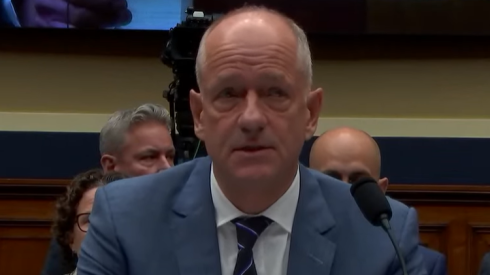
At a congressional hearing, UnitedHealth Group CEO Andrew Witty said the cyber theft includes personally identifiable information on “maybe a third” of all Americans.
-
The state is recommending a $1.4 million contract for more efficient incident management, including automated reports, be approved. Doing so should speed up response time on children, youth and family cases.
-
A Montgomery County commission approved spending more than $328,000 through March 2025 on the first two phases of work for the new safety net portal. The goal is to better connect providers across the community.
-
The technology is beginning to impact how patients receive care, from the use of virtual reality to deploying facial recognition for check-in. These were among the use cases on view at the recent eMerge Americas conference.
-
After a ransomware attack recently caused major issues for medical providers as well as their patients, lawmakers are looking for policy moves that can protect against a repeat.
-
A cyber attack reported by Group Health Cooperative of South Central Wisconsin in January affected 533,809 people, the HMO told federal regulators this week, and stolen data may include Social Security numbers.




Most Read

- Learning Beyond Paper to Offer Digital, Bilingual After-School Courses
- California Governor’s Order Targets GenAI Procurement
- Portland, Ore., Zero-Emission Pilot Tracked Curb Users
- Ohio CIO Katrina Flory Expands and Evolves Digital Services
- Pierce County, Wash., Sheriff Shutters License Plate Readers







