
Emerging Tech
-
 Cybersecurity experts say AI and automation are changing how much impact manipulated data can have on government technology systems.
 -
The Flathead County Sheriff's Office is set to receive a new remote underwater vehicle after getting approval from county commissioners on Tuesday.
-
The Larimer County Sheriff’s Office on Monday arrested the man after he reportedly stole a vehicle from a business in east Fort Collins, set it on fire and damaged nearby agricultural land.


More Stories
-
Starting July 1, a statewide ban on facial recognition technology will go into effect as part of House Bill 2031. Law enforcement agencies will need legislative approval prior to using the controversial technology.
-
Travelers at Minneapolis-St. Paul International Airport are now able to order food from vendors using their phones or laptops. Their orders are supposed to be delivered by rolling droid within 15 to 30 minutes.
-
One is a giant, publicly-traded company. The other is a two-year-old startup. Together, they're putting out a solution that seeks to help local government speed up bus systems by keeping dedicated lanes clear.
-
More than 60 law enforcement agencies in North Carolina have been named in a report centered on the use of a controversial facial recognition tool that relies on facial images scraped from social media profiles.
-
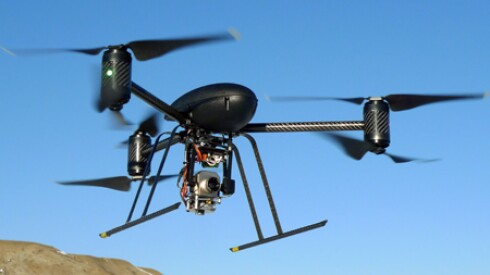
Pittsburg County Sheriff Chris Morris said the unmanned aircraft system will be useful when it comes to searching for missing children, hunters and elderly people and other law enforcement activities.
-
Scooter companies like Lime and Bird are introducing new products to the micromobility landscape in a number of cities. Meanwhile, New York City is introducing its first scooter pilot project.
-
The legislation from Sen. Pat Spearman, D-North Las Vegas, would charge the task force with attracting businesses to the state and identifying regulatory barriers in areas like blockchain technology, robotics and artificial intelligence.
-
VIA Metropolitan, the transit operator in San Antonio, Texas, has partnered with Spain-based startup NaviLens to pilot a wayfinding smartphone application for blind or low-vision transit riders.
-
Though the idea of vaccine passports has attracted criticism, the state of New York has taken the plunge as the first state in the U.S. to create one, saying it will help facilitate economic activity. Here's how it works.
-
Officials involved in the project say it's the first in the U.S. to use a new international standard meant to make mobile IDs interoperable. So in the next year, Utah's pilot project just might show everyone the future.
-
As local water departments look to modernize their infrastructure with available technology, several cities are already laying out a model that utilizes artificial intelligence.
-
The divide between pro-cryptocurrency states, like Wyoming and Colorado, and more heavy-handed regulators, like New York, has created a messy web of rules for companies and those charged with enforcing policy.
-
Some companies have taken AI chatbots to another level, even offering automated psychotherapy. Others embed AI in work computers to detect burnout or other worrisome behavior. But the technology poses its own issues.
-
The American Jobs Plan, to be released today, is proposing the investment of $2 trillion toward the country’s aging infrastructure and next-generation transportation technologies, among other things.
-
As coronavirus vaccines become more widespread, critical questions arise around providing proof of vaccination. Blockchain or open source digital ledger technologies could offer a secure solution.
-
The Ray, a highway testbed in Georgia, is partnering with Central Texas Regional Mobility Authority, the Texas Department of Transportation and the city of Austin to explore transportation opportunities.
-
Plus, an AI for diabetes platform raises millions, Ford plans to stop selling gas-powered vehicles in Europe, and Baltimore ends its controversial drone surveillance program.
-
A partnership among US Ignite, the National Science Foundation and Schmidt Futures has selected seven projects in both rural and urban areas to expand Internet access and help close the digital divide.









