
-
 The myAurora 311 Open Data Portal gives residents a detailed look at the city's non-emergency call traffic, service trends and response, and is part of a broader push to make city operations more transparent.
 -
A proposed amendment to the Michigan Constitution would force state universities to follow local zoning ordinances and go through public processes before beginning construction on a data center.
-
In Singapore’s IT department, innovation comes not only from in-house technical expertise, but through pushing those skills out to the rest of the enterprise and supporting innovation nationally.


More Stories
-
Even as cryptocurrency investors deal with recent losses in value, public-sector interest in crypto continues to grow. That means more opportunities for fraud and more need for protections, the companies say.
-
The private Catholic liberal arts university in Pennsylvania is adding a new program, potentially bridging computer science and statistics at a time when the field is expected to grow by 20 percent over the next decade.
-
Joy Bonaguro launched the San Francisco Data Academy during her time with the city. Now as California's chief data officer, she's expanding and improving the model to support agency-level analytics.
-
Illinois law enforcement leaders fighting a surge in gun violence have launched a searchable database they say will allow departments to quickly access information on how illegal firearms are moving around the state.
-
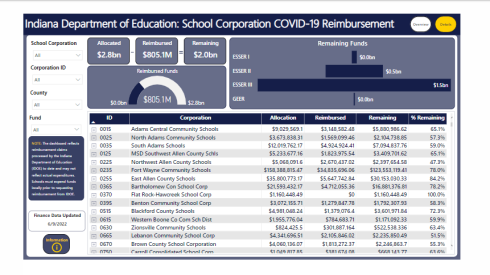
Developers of the newly updated website say it will provide more transparency on how the state’s school districts are spending COVID-19 relief funds, and eventually how it relates to student outcomes.
-
The domain registration giant has partnered with mySidewalk to share data from their Venture Forward platform. The data suggests micro businesses are most concentrated in Nevada and Delaware.
-
The Metropolitan Sewer District of Greater Cincinnati is going to be piloting a technology solution to gain a better understanding of its wastewater network and more advanced sampling methods.
-
Through a project launched during a recent SAS Hackathon, Milwaukee County, Wis., is looking to AI to examine and improve ordinances and policies related to foreclosure that may inadvertently promote racial inequities.
-
A new certification program aims to prepare public-sector technology leaders to make their organizations more data-driven, evidence-based and responsive, with a focus on data management, digital innovation and AI.
-
The Center for Data Innovation held a panel discussion Tuesday in which education and AI technology leaders discussed how AI could help K-12 classrooms, centering the role of the teacher as the most pivotal.
-
The California Department of Water Resources is using technology to map groundwater throughout the state, enabling better basin management from local water managers by providing access to more thorough data.
-
As part of the California state budget, Gov. Gavin Newsom has proposed the merging of the Office of Digital Innovation (ODI) with CalData. The new amalgamation will be called the Office of Data and Innovation.
-
Gov. Mark Gordon's administration launched a new dashboard with digital tools to support businesses, job seekers and educators in the state with resources about new emerging workforce opportunities.
-
This month, the Ohio Narcotics Intelligence Center launched operations at two new offices to better serve local law enforcement agencies, leveraging technology in their criminal investigations.
-
As part of a comprehensive plan to improve the education system and make it more equitable, the U.S. Department of Education is building an online dashboard of data related to equity in U.S. schools.
-
Last week, New York City released a digital version of the Mayor’s Management Report. The digital report intends to give residents an easy way to view and compare city agency data.
-
Plans to bring data centers, the digital information storehouses outfitted with tax breaks in Connecticut legislation fast-tracked last year, are getting snagged by a tangle of questions about local rules.
-
With evidence that algorithms can treat people unequally, society must question why that is. Research into equity and algorithms indicates that no algorithm can mathematically fulfill all notions of fairness.




Most Read

- New Federal Strategies, Rising Risk From Iran Top Cyber Themes
- Raleigh, N.C., Turns AI Experiments Into Tech Strategy
- Tornado Season Ahead, Cass County, Ind., Sheriff Promotes App
- Does using autocomplete in your writing change the way you think?
- Data Center Tax Break Figures in Virginia Budget Talks







