
-
 The FBI’s annual Internet Crime Report shows that emerging technologies are shaping cyber theft, with digital fraud and related losses reaching new highs in 2025, topping more than $21 billion forfeited.
 -
Jackson County, Mo., could soon take steps aimed to ensure new data centers are not constructed in unincorporated areas of the county, at least temporarily.
-
San Jose, Calif., formed the GovAI Coalition in 2023 to bring technologists from different sectors together to collaborate on AI governance. After a unanimous vote, it will now go forward as a nonprofit.


More Stories
-
New automatic water meters being installed across New Orleans could finally solve one of the city's most frustrating problems: unpredictable and unreliable sewage and water bills.
-
Downtown cyclists filmed a Waymo robotaxi driving against oncoming traffic for nearly two blocks. The company, however, says the driverless vehicle did this to keep away from a potential collision.
-
A bipartisan group of U.S. senators has introduced a congressional framework, in a letter to Senate artificial intelligence working group leaders, that would establish federal oversight on extreme risks related to AI.
-
Urban technologists at the recent 2024 Bipartisan Tech Policy Conference discussed the various ways emerging tech like autonomous vehicles have evolved.
-
The technology is beginning to impact how patients receive care, from the use of virtual reality to deploying facial recognition for check-in. These were among the use cases on view at the recent eMerge Americas conference.
-
Whether harvesting, monitoring crop health, or connecting with customers, the needs of modern farming have already sparked a variety of agriculture technology startups in the Pittsburgh region.
-
With driving while intoxicated arrests rising, Minnesota is turning to tech for solutions. The state is piloting cutting-edge roadside drug testing devices with unexpected participants: people arrested for DWI.
-
The university is leading research efforts with 19 of its counterparts on the use of artificial intelligence in education. ECU researchers are also working to develop new AI tools for students and researchers.
-
City law enforcement will use an $800,000 grant from the Bureau of Justice Administration to implement and evaluate three different technologies including ShotSpotter.
-
The Warner Robins Police Department is using software to aggregate information that could help it close criminal cases. It is a help to the department, which does not have a cyber crime division.
-
The Conneaut Area City Schools Board of Education voted to buy new Chromebooks and improve the sound systems at a middle school and high school. Five to 12 laptops each day, out of 1,600 total, need repairs.
-
As the use of automatic license plate readers grows, Government Technology reviewed public safety agencies’ audits and policies to determine progress.
-
The city hopes to link body-worn camera activation to officer guns and tasers, Police Commissioner Kevin Bethel told the City Council Tuesday. Grant-funded stationary and mobile license plate readers are in the works, he added.
-
Oregon State University’s inaugural AI Week features several panels on artificial intelligence led by faculty and tech industry leaders. It culminates Friday with the first edition of a yearly forum, and groundbreaking on an innovation complex.
-
Officials on Friday announced the deployment of the first IBM Quantum System One computer on a university campus, at Rensselaer Polytechnic Institute in upstate New York. It’s aimed at driving quantum research and education programming.
-
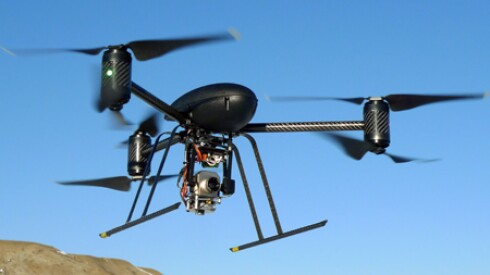
The new initiative is expected to enhance safety by advancing drone airspace management and navigation. It is designed as a peer-to-peer model for statewide use, and is aimed at avoiding conflicts in shared airspace.
-
State Chief Information Security Officer Jeremy Rodgers talked about the Sunshine State’s approach to artificial intelligence at a recent cybersecurity conference. A centralized legislative framework around AI does not yet exist, he said.
-
The Red River Watershed Management Board and the Fargo-based International Water Institute debuted a Lidar database in March. It’s free to access and offers highly accurate measurements of terrain and flood control structures in the area.




Most Read

- Why Anthropic’s Mythos Is a Systemic Shift for Global Cybersecurity
- Virtual Learning Boomed, but Now States Struggle to Govern It
- Yuma County, Ariz.’s New CIO Hails From the City of Yuma
- Funding California IT Like Other Types of Infrastructure
- Is there a bike bell that you can hear even with noise-canceling headphones?







