
-
 U.S. intelligence agencies are warning private-sector companies throughout the nation that Iranian actors “are conducting exploitation activity” that has resulted in disruptions to U.S. critical infrastructure.
 -
The document outlining the Trump administration’s approach to AI signals less regulation and more innovation. To plan for it, state and local governments must understand what it includes — and what it omits.
-
The towers from General Dynamics have been deployed along the U.S.–Mexico border, and they use a combination of cameras and radar, as well as training based on years of earlier footage.


More Stories
-
Critical infrastructure is a big focus of this new federal refresh, with top goals around cybersecurity protections for health care, education, energy and water.
-
The Senate Subcommittee on Communications, Media and Broadband heard from experts on what ending or lapsing the federal Affordable Connectivity Program would mean to millions who rely on it for Internet access.
-
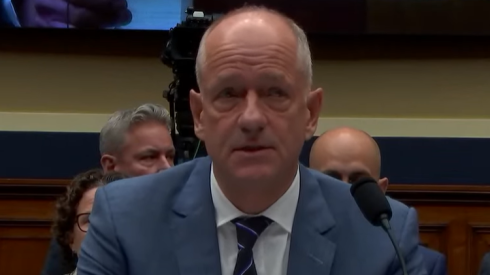
At a congressional hearing, UnitedHealth Group CEO Andrew Witty said the cyber theft includes personally identifiable information on “maybe a third” of all Americans.
-
The man, who was arrested last week, is suspected of allegedly defrauding two elderly victims of thousands of dollars in April via an online phishing scheme. He faces a federal charge of conspiracy to commit wire fraud.
-
Artificial intelligence is quickly becoming mainstream for public agencies. But as state tech leaders look toward the benefits of the technology in the coming years, they are also sounding cautionary notes.
-
Experts recently discussed new early-warning tools, strategies for disrupting cyber criminals long term, and awareness and preparation campaigns that reach everyone.
-
As the deadline for year two funding approaches, Washington CISO Ralph Johnson talks about the state’s spending priorities with historic federal support for cybersecurity as the NASCIO Midyear conference gets underway in National Harbor, Md.
-
Federal legislation from Santa Ana Democratic Rep. Lou Correa would compel leading border officials to make sense of how artificial intelligence could help in securing the nation’s border. AI already plays a part in immigration enforcement.
-
Plus, $204 million is made available for Internet expansion in Pennsylvania, New York’s ConnectALL launches its County Partnerships program, and more.
-
The Port of Los Angeles stands out for strong cyber defenses, but at other ports across the country, cybersecurity capabilities can vary wildly. The White House seeks to change this.
-
The new technology, demonstrated Wednesday at the city’s international airport, verifies travelers’ identities by matching an ID to a photo taken at a TSA checkpoint. The system alerts on fraudulent or expired identification.
-
Lawmakers in New Hampshire and elsewhere are debating measures that would better identify AI-generated material, as the November presidential election nears. Fair election groups say the proposals don’t go far enough.
-
Combined, the cities received nearly $1.5 million in grants through a U.S. Department of Transportation program. They will use it to maintain and plan the expansion of zero-emissions vehicles, and to enhance pedestrian safety.
-
A bipartisan group of U.S. senators has introduced a congressional framework, in a letter to Senate artificial intelligence working group leaders, that would establish federal oversight on extreme risks related to AI.
-
Authorities are working to prepare for one by, for the first time, conducting a massive federal tabletop exercise focused on food and agriculture cybersecurity resilience.
-
The federal government is slated to distribute $18.2 million of Tribal Cybersecurity Grant Program funds as soon as the spring, and experts say the funds will help address important needs.
-
April is the last month of full funding for the federal Affordable Connectivity Program, which helps subsidize monthly Internet service for low-income households. Advocates hope it will be reauthorized.
-
After a ransomware attack recently caused major issues for medical providers as well as their patients, lawmakers are looking for policy moves that can protect against a repeat.




Most Read

- Virtual Learning Boomed, but Now States Struggle to Govern It
- Yuma County, Ariz.’s New CIO Hails From the City of Yuma
- Funding California IT Like Other Types of Infrastructure
- Is there a bike bell that you can hear even with noise-canceling headphones?
- Casper, Wyo., Will Use AI to Analyze Police Bodycam Footage







