
-
 As artificial intelligence and digital tools continually reshape their coursework, students say common frustrations include a lack of clear AI guidance, an overabundance of tools and apps, and Wi-Fi connectivity issues.
 -
A multiyear initiative between a private historically Black liberal arts college and a tech company will expose up to 750 high school students in the Birmingham area to AI technology and workforce opportunities.
-
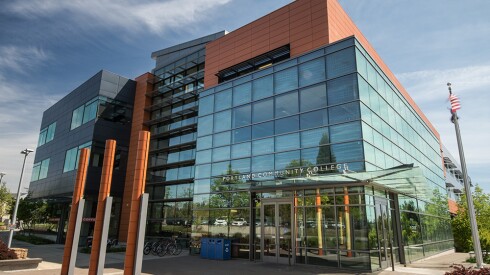
A new facility at Portland Community College is helping students practice specialized manufacturing skills and cleanroom protocols using equipment that simulates a real manufacturing environment.


More Stories
-
Voters in Oklahoma this week narrowly passed a bond to improve a career and technical education center, including expanding capacity for high-demand programs like cybersecurity, programming AI and aviation technology.
-
In addition to almost every four-year college in the state, the Connecticut AI Alliance will also include six community organizations and nonprofit agencies working together to drive innovation and create jobs.
-
Connecticut Gov. Ned Lamont asked Yale instructors and students to study artificial intelligence policies across the U.S. and come back with insights and advice. Their 50-slide presentation informed what he did next.
-
A donation from venture capitalist Bill Gurley University of Texas at Austin will help support a robotics program, including freshmen research and updates to lab equipment, computing power and materials.
-
As South Carolina's educational sector evolves to serve its economic development, it won’t be long until all its universities offer degrees in AI and cybersecurity to complement traditional computer science degrees.
-
OpenAI has committed $50 million for research and technology to support AI breakthroughs at 15 institutions including the University of Michigan, the California State University system and Harvard University.
-
A private university in Maine is the first institution in the U.S. to go live with an artificial intelligence agent built by Agentforce, part of Salesforce's platform that helps organizations build and deploy AI agents.
-
The Illinois House and Senate are considering an amendment that would allow community colleges to offer four-year bachelor’s degrees in technical programs like advanced manufacturing and cybersecurity.
-
From theory to practice, regional security operations centers empower college and university students to apply cybersecurity learning in real-world scenarios, while providing protection to cities and others needing coverage.
-
As fraudsters exploit open-access policies and online learning, colleges are turning to artificial intelligence to reclaim student seats and safeguard financial aid.
-
A professor of educational theory is creating an AI tool that records video and audio to determine whether a teacher addressed each section of the classroom, how often they used group work and other techniques.
-
A new esports lab at Long Beach City College includes 27 Alienware gaming stations, with a teaching station for an instructor or coach to interact with students, and an optimized lighting system to reduce visual fatigue.
-
The Texas A&M University System has an agreement with World Wide Technologies Inc., a NVIDIA channel partner, to purchase an AI supercomputer to support research in AI, graphics rendering and scientific simulations.
-
The number of AI-related job postings in the Grand Rapids area has increased 338 percent since 2022, so Grand Valley State University is expanding its College of Computing with new programs and concentrations.
-
A new EDUCAUSE study reveals that while AI is becoming a strategic priority in higher education, cost and policy development, especially at small schools, still hinders widespread implementation.
-
Specifically designed for faculty, MonarchMind gives users access to ChatGPT, Gemini and Llama on a secure, university-run system that does not share chat data with outside parties or use it to train AI models.
-
The university is hoping to streamline administrative operations, improve AI literacy and enhance recruitment efforts. It has also requested millions more from the legislature for other tech-related initiatives.
-
A public research university in Huntsville, Texas, will open a new college this fall offering certificates in the paralegal studies program, practical AI and intelligent automation, and computer support and security.









