
-
 As artificial intelligence and digital tools continually reshape their coursework, students say common frustrations include a lack of clear AI guidance, an overabundance of tools and apps, and Wi-Fi connectivity issues.
 -
A multiyear initiative between a private historically Black liberal arts college and a tech company will expose up to 750 high school students in the Birmingham area to AI technology and workforce opportunities.
-
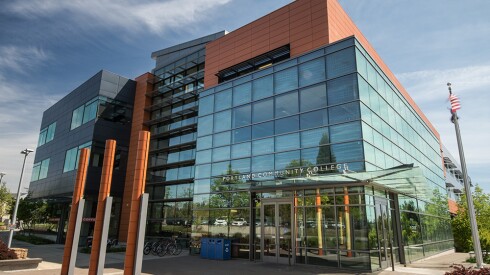
A new facility at Portland Community College is helping students practice specialized manufacturing skills and cleanroom protocols using equipment that simulates a real manufacturing environment.


More Stories
-
The funding, coming from the Infrastructure Investment and Jobs Act, will be used for purchasing new library devices, improving public library computer infrastructure and digital literacy training.
-
Software that detects AI use and plagiarism in writing now offers a function to assess the credibility of claims in a body of text, offering Internet sources that either support or contradict the author's claims.
-
A $9.9 million federal grant will help the college use extended reality, in the form of virtual tours and VR videos, to give people with disabilities a glimpse into what a typical workday in manufacturing looks like.
-
A new AI-powered app aims to improve U.S. math proficiency by giving college students one-on-one math support while cutting educators’ workload by taking on course planning, assignment creation and grading.
-
Maryland poured investments into its Cyber Workforce Accelerator program last year. The latest grant funding shows that the state’s focus on inclusiveness in advancing technology careers is not limited to cybersecurity.
-
The online programs, open to the public, will offer certifications in software engineering, data analytics or cybersecurity, along with one-on-one mentorships from industry professionals at Fortune 100 companies.
-
The University of Wisconsin-River Falls, UW-Eau Claire and UW-Stout will use a National Science Foundation grant to support computer science research and curriculum development by high school teachers.
-
Tufts University created a clinic to connect cybersecurity students with nonprofits in need of cybersecurity consultants. Due to increased threats and workforce demand, university-based clinics like this are on the rise.
-
For colleges and school districts adopting artificial intelligence tools, a strong foundation of data maintenance will allow staff to make informed decisions about technology and avoid costly implementation errors.
-
The Texas Higher Education Coordinating Board doled out nearly $13 million to 43 grantees this month to bolster training programs to address labor shortages in fields such as cybersecurity and automotive technology.
-
Set to launch this fall, a new college at the University of Texas at San Antonio is expected to enroll more than 5,000 undergraduate and graduate students in programs driving workforce and economic development.
-
Four ed-tech vendors shared their perspectives on how artificial intelligence in learning management systems has evolved throughout the year, and what they see on the horizon in 2025.
-
The University at Albany will offer $5,000 scholarships to exceptional high school and transfer students to boost enrollment in its College of Nanotechnology, Science and Engineering.
-
Taking stock of things done and not done at the end of the year, IT leaders would do well to recognize the hard work and dedication of their staff, which at times goes forgotten or unnoticed.
-
The university had already banned employees from using the app on school-owned and operated devices, but starting Jan. 3, students and staff will not be able to use or download the app on the university network.
-
A new cyber center will extend the Science Applications International Corporation's footprint to directly support the U.S. Air Force’s initiatives in cybersecurity, electronic warfare, information systems and digital infrastructure.
-
According to several leaders of ed-tech companies and nonprofits, 2025 will bring a need for increased teacher and state-level leadership, better data, college modernization, and greater focus on the global ethics of AI.
-
A public community college in North Carolina will put a $5 million federal grant toward transforming a warehouse into a skilled trades center with programs in fields such as HVAC and construction.









