
-
 As artificial intelligence and digital tools continually reshape their coursework, students say common frustrations include a lack of clear AI guidance, an overabundance of tools and apps, and Wi-Fi connectivity issues.
 -
A multiyear initiative between a private historically Black liberal arts college and a tech company will expose up to 750 high school students in the Birmingham area to AI technology and workforce opportunities.
-
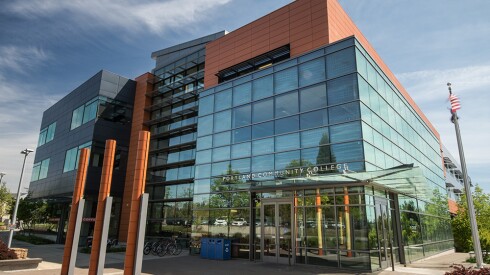
A new facility at Portland Community College is helping students practice specialized manufacturing skills and cleanroom protocols using equipment that simulates a real manufacturing environment.


More Stories
-
Rutgers University is working with Google to add undergraduate courses and adjust graduate business degrees to accommodate artificial intelligence’s impact on the industry.
-
To make well-paying careers more accessible to those without four-year degrees, Gov. Gavin Newsom this week unveiled a California Master Plan for Career Education to encourage work-based learning and workforce training.
-
A new data system in Washington, D.C., will track student outcomes from preschool through post-secondary education and employment, potentially informing decisions by parents, employers and community partners.
-
Driven by student interest and funded through student fees and philanthropy, a new esports facility with 25 new gaming computers is open for both competitive and recreational gaming.
-
Leaders hope NVIDIA’s resources, training and networking opportunities will help improve competency in artificial intelligence among San Jose city employees, as well as faculty and students at San Jose State University.
-
A need for skilled workforce development and technical training in Central Texas has prompted the college system to expand to a 12th campus, which will likely host programs in advanced manufacturing technology.
-
North Carolina Agricultural and Technical State University, along with researchers from other universities and industry partners, will co-develop an advanced simulation platform between ground and air transport systems.
-
A high school in Colorado next year will start offering a course in unmanned aerial systems, with the high school providing an in-person flight teacher and Aims Community College leading an online, ground-school course.
-
A community college in Southern California will offer a bachelor’s degree in drone and autonomous systems starting in 2026, aiming to prepare a workforce to use new technologies and applications of unmanned aircrafts.
-
The university is working with the nonprofit Operation HOPE and Sam Altman, who leads OpenAI, to start training people from kindergarten all the way through college on AI, focusing on south-side students.
-
After working with higher education institutions on their approaches to integrating generative artificial intelligence, consultants at KPMG think of their clients as trailblazers, synergists, mavericks or stragglers.
-
A $100 million grant for a University of Michigan supercomputing and artificial intelligence lab, set up in partnership with the Los Alamos National Laboratory, is expected to create 200 jobs over 10 years.
-
New funding for the state's Cyber Workforce Accelerator program aims to enhance cyber ranges and address talent gaps, with a special focus on reaching under-represented groups, including women and people of color.
-
For all the uncertainties of the near future, such as what industries and job titles will exist in the years ahead, experts are convinced artificial intelligence will continue driving change in work and education.
-
A new graduate program launching in 2025 aims to help data scientists, educators and administrators make the most of AI in education settings, covering technical knowledge as well as ethical impacts and social contexts.
-
The 2024 Republican platform could have a ripple effect on climate change research. Two California university researchers say the next four years will be stressful, but technological innovations give them hope.
-
A bill awaiting Gov. Mike DeWine's signature would support the career-technical workforce by allowing teachers to be certified through coursework and local professional development or a two-year mentoring program.
-
Census data shows that the number of city residents 25 and older with a bachelor's degree in science and engineering fields nearly doubled from 106,000 in 2010 to 207,000 in 2023.









