-
 The Osceola County Board of Commissioners approved the purchase of new portable and dual band radios at a cost of $330,552 during its meeting Dec. 16, by a vote of 5-1.
 -
The new unit, part of the Office of Information Technology Services’ statewide strategy, will focus on New York State Police’s specific needs while preserving shared IT services like AI and information security.
-
The City Council has approved a three-year, $200,000 contract to install the surveillance devices. Data collected may be used by other state and local law enforcement at city discretion, the police chief said.


More Stories
-
After years of hashing out concerns with privacy advocates, the BART board on Thursday approved an up to $2.4 million contract to install license plate readers at parking lots throughout the transit system.
-
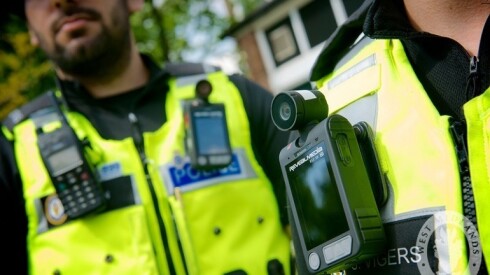
A new survey from Veritone shows respondents support police using technology such as body-worn cameras and facial recognition technology when used to find criminal suspects. Can they be used to increase trust as well?
-
Solar power means the cameras can be placed in more locations, while AI means police can search more easily for vehicle type rather than just license plate number. It’s a trend law enforcement has been moving toward.
-
The municipal court in Chandler, Ariz., is expanding its virtual service to better protect survivors of domestic violence through the justice system. The court has teamed up with a local shelter on the project.
-
The company, which sells computer-aided dispatch tech, says triage for 911 calls can reduce pressure on first responders. A program in Rochester, N.Y., also shows the potential for costs savings for public agencies.
-
A former Uber employee filed a lawsuit claiming that the company broke federal law by instructing her to provide very little information to the police and courts in response to various legal situations.
-
Federal lawmakers are asking how to better help the critical infrastructure sector defend against cyber threats. The answer may involve tailored, actionable intelligence and minimum cybersecurity requirements.
-
The Michigan Department of Corrections is expanding the learning management system it first evaluated last year to broaden education opportunities for offenders and better prepare them for their re-entry transition.
-
The New Jersey Office of Homeland Security and Preparedness has launched a disinformation portal to give residents a fighting chance at distinguishing real from falsified online content.
-
In 2019, California banned the use of facial recognition in police cameras. That law, however, is set to expire at the end of 2022. The state should consider extending the ban based on the tech’s limitations.
-
The backlash against secret surveillance of San Diego residents led to new legislation Tuesday when the City Council unanimously approved a new privacy advisory board that will evaluate all future surveillance proposals.
-
The COVID-inspired pivot to remote court hearings may be here to stay. While virtual proceedings may need improved tech support, overall they allow more people to be heard in the justice system.
-
A new transportation plan in Washington sets a goal to phase out all gas-powered vehicles and to only allow the sale of electric vehicles by 2030. This timeline is even more aggressive than California’s 2035 deadline.
-
In response to a Los Angeles Times investigation that discovered that sometimes dangerous fumes affect passengers and pilots on commercial airplanes, Congress may introduce new regulations with a bill.
-
The Cleveland County, Okla., jail will now use a new technology that deploys devices to monitor the vital signs and movement of detainees — marking a first for jails in the state of Oklahoma.
-
For years, Hollywood has said no to police body cameras while other departments across the country — including nearby locales such as Miami, Fort Lauderdale and the Broward Sheriff’s Office — have said yes.
-
With evidence that algorithms can treat people unequally, society must question why that is. Research into equity and algorithms indicates that no algorithm can mathematically fulfill all notions of fairness.
-
Plus, the FCC authorizes $313 million more through the Rural Digital Opportunity Fund, Maine creates a web page to track broadband work in the state, government agencies look to hire digital inclusion staff, and more.