
-
 In December a judge ordered that FEMA restore funding to its Building Resilient Infrastructure and Communities program, including money earmarked for Washington. Tuesday, a coalition of states asked that the ruling be enforced.
 -
Several members of Lexington’s Urban County Council expressed frustration about how the city responded to Winter Storm Fern, especially in light of the increased frequency of what were once rare weather events.
-
Washington, D.C., government shifted to operate with modifications, to ensure essential services remained available during the January snow event. IT played a supportive role behind the scenes.


More Stories
-
Broward Sheriff Fire Rescue confirmed Tuesday that one of the firefighter-paramedics slept through the emergency, delaying the truck from ever leaving the station.
-
Health officials have warned of another potentially devastating winter surge — especially as new, immune-evasive virus variants emerge and more people move indoors for social activities.
-
"The critical fire weather conditions are in place: dry fuels, combined with low relative humidity ... along with gusty east winds," Michalski said. "It drives the rapid growth on the fires we're seeing."
-
For participating public-safety personnel, this simulated exercise offered the type of hands-on training that can only be surpassed by an actual disaster.
-
The exercise was the culmination of more than 18 months of planning by both public and private agencies and included more than 511 participants who were evaluated over multiple days during the last week of September.
-
Hurricane Ian forced at least 16 hospitals from central to southwestern Florida to evacuate patients after it made landfall near the city of Fort Myers on Sept. 28 as a deadly Category 4 storm.
-
James Kubik lost a childhood friend when she died in a boating accident. What’s worse is that communication equipment, including marine radios, was on board but inaccessible. It spurred Kubik to develop his own device.
-
Lately when the Honolulu Fire Department has responded to rescues and fires, it has encountered an increase in “rogue drones.” These unmanned aerial onlookers have been found to tail department helicopters.
-
In Fort Myers Beach after Hurricane Ian, just as in countless other disasters, they go about their work methodically. Street by street, house to house, picking through rubble, and knocking on doors looking for survivors.
-
Officials have linked about 100 deaths across 10 Florida counties to Hurricane Ian, including 52 in Lee County, where storm surges reached 10 feet high and destroyed bridges that connect some islands to the mainland.
-
Kevin Guthrie, Florida’s emergency management director, explained during a morning press briefing in Tallahassee that the state is trying to verify whether 20 of the deaths were as a result of the storm, or unrelated causes.
-
A recent survey of emergency personnel indicates that violence is increasing and taking a physical and emotional toll on professionals and thus compromising the care that patients are getting.
-
A Storm Surge Warning remained in effect Thursday, Sept. 29, for parts of the coast including Savannah, Tybee and Ossabaw islands, according to the National Weather Service office in Charleston.
-
Gov. DeSantis said several people on the barrier islands of Lee and Charlotte counties were rescued by helicopter early Thursday morning. The area experienced “massive inundation.”
-
As shelters opened across Central Florida, officials warned that “historic flooding” could be in store for the region’s low-lying and flood-prone areas, with Hurricane Ian expected to bring torrential downpours through the region.
-
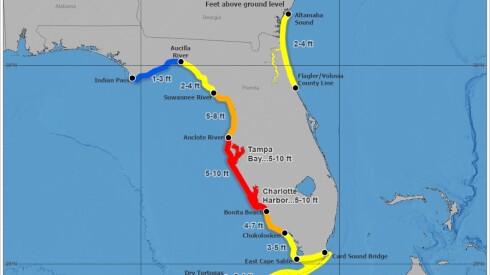
The storm surge predictions soared overnight to 12 to 18 feet for Englewood to Bonita Bay, a forecast so high a new color was added to the National Hurricane Center’s peak storm surge prediction map.
-
If the track holds — and forecasts stress that it may still change — it could reduce the flooding threat to Tampa Bay but raise it for coastal communities to the south like Sarasota and Cape Coral.
-
The tropical storm is expected to arrive in the Charlotte region “Friday into Saturday,” the National Weather Service. That also goes for the North Carolina foothills, parts of the North and South Carolina mountains and Upstate South Carolina.









Most Read








