
-
 High schoolers are learning about AI through peer-to-peer work and after-school programming like Code Girls United, and higher education institutions in Montana are prioritizing introductory lessons in AI for students.
 -
Tulsa International Airport recently suffered a ransomware attack, a spokeswoman confirmed. The facility is independent of the city of Tulsa, which suffered its own such incident in early 2019.
-
The Laredo Police Department is expanding its use of artificial intelligence across several incoming programs — a move teased by Chief Miguel Rodriguez during last week's State of the City address.


More Stories
-
A health-care company in Palm Beach works with doctors and other companies to use patient medical records to foresee possible health outcomes before they can escalate. Its technology is now used in 450 dialysis centers nationwide.
-
The municipality is considering offering the company a grant worth up to $847,500 to open an operations center for its new artificial intelligence-powered shipping platform. The organization already runs a distribution center in the city.
-
William “Bill” Eggers, executive director of Deloitte’s Center for Government Insights, explores the latest technologies and anticipates trends for government in 2024.
-
With a crowd of more than 900 people, the NASCIO Midyear Conference buzzed with energy about generative artificial intelligence, along with concern that humans remain in charge.
-
New "patients" made of plastic, metal and microchips are designed to sense their environment and simulate human patient experiences for students in the University of Oklahoma's College of Nursing.
-
Thurston County Sheriff Derek Sanders had been seeking approval to buy and pilot a small number of trackers in anticipation of rollbacks of state laws limiting police pursuits.
-
The owner of Clearfiber Inc., an Internet service provider in Monongalia County, was charged with money laundering after allegedly defrauding a United States Department of Agriculture grant program.
-
Experts say that smarter roads could reduce car accidents and fatalities, and they could also let roads agencies know about debris in the roadway, potholes and other things that need attention.
-
A handful of Pennsylvania senators have expressed support for legislation that would require student cellphones to be placed in secure lockable bags in all public schools during the school day.
-
A school district in Manhattan, Kan., wants all employees to take cybersecurity training after several of them clicked on a phishing email, and fewer than 10 percent reported it as phishing.
-
With policies and guardrails in development around the country on responsible use of generative AI, Massachusetts and Georgia are creating environments where agencies can safely find real-world uses for the emerging tech.
-
The Mount Rushmore State’s chief technology officer of more than nine years will depart next month after almost three decades of service. The search for his successor is already in progress.
-
The Consortium for School Networking’s 2024 State of EdTech District Leadership Report found cybersecurity, interoperability, broadband and device access, and funding among top concerns for district IT leaders.
-
The Senate Subcommittee on Communications, Media and Broadband heard from experts on what ending or lapsing the federal Affordable Connectivity Program would mean to millions who rely on it for Internet access.
-
The county, the city of Niagara Falls and the town of Lockport will receive more than $130,000 via the State Homeland Security Program. The funding can be used, generally, to address coverage gaps and incident response.
-
The Cherry Capital Airport in Traverse City will work with contractor Windemuller Electric to do a vulnerability assessment. Officials will look at the airport’s computer network and do an internal audit of digital systems.
-
The state’s DMV Transformation Effort, commenced in late 2021 with a gradual rollout of online service offerings, may not end on schedule. A lack of staff availability is requiring extended outside support.
-
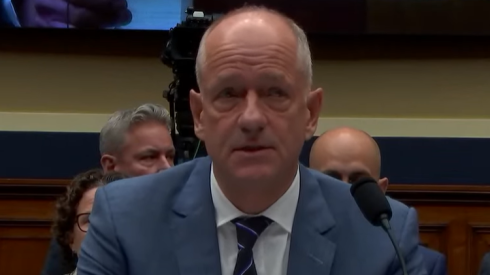
At a congressional hearing, UnitedHealth Group CEO Andrew Witty said the cyber theft includes personally identifiable information on “maybe a third” of all Americans.


Most Read

- Communication That Builds Credibility: How Oregon Corrections Modernized Outreach
- New Britain, Conn., Works to Recover from Cyber Attack
- New Mexico Bill Would Limit Sharing of License Plate Data
- Louisiana State University to Research Energy Tech With DOE
- UW-Milwaukee's 'Retrolab' Conveys World Before Cellphones, Social Media







