-
 The Larimer County Sheriff’s Office on Monday arrested the man after he reportedly stole a vehicle from a business in east Fort Collins, set it on fire and damaged nearby agricultural land.
 -
The Sacramento County Board of Supervisors will evaluate a $13 million rental agreement for the Sheriff’s Office to obtain new radios and accompanying equipment. The previous lease dates to 2015 and expired last year.
-
The City Council signed off on directing roughly $360,000 in state funds to the police department. Of that, more than $43,000 is earmarked for software that will let police “obtain and retain” digital evidence.



More Stories
-
Soon, police in Pittsburg, Calif., will have to receive city council approval for the purchase, acquisition and use of military equipment, which includes items such as armored vehicles and chemical munitions.
-
Michigan Secretary of State Joceyln Benson walked back the statement that her office wouldn't release to media the driving records of "victims of violence" just seven hours after she made the comment.
-
The company hopes to gain revenue by offering upgrades to the free software offered to emergency dispatch agencies. The funding round comes as NG911 work gains more investor and public interest.
-
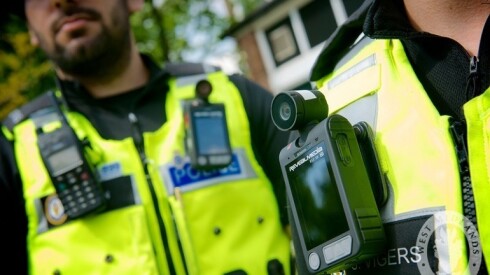
After eight years of study, Wisconsin’s capital city could take its first major step toward joining the growing number of U.S. communities that equip their police officers with body-worn cameras.
-
Although the dollar amounts were down relative to last year's blockbuster deals, the number of transactions has remained high with activity from Avolve, NEOGOV, RapidSOS, ClearGov, Tyler Technologies and more.
-
This week, the “In Case You Missed It” crew talks about weapon detection in light of the New York subway shooting and the Center for Digital Government’s Teri Takai gives an overview of the Government Experience Awards.
-
Following interviews with 27 people who work directly in the country’s courts systems, a study by Next Century Cities has found that digitizing the courts may exclude residents on the wrong side of the digital divide.
-
After years of hashing out concerns with privacy advocates, the BART board on Thursday approved an up to $2.4 million contract to install license plate readers at parking lots throughout the transit system.
-
A new survey from Veritone shows respondents support police using technology such as body-worn cameras and facial recognition technology when used to find criminal suspects. Can they be used to increase trust as well?
-
Solar power means the cameras can be placed in more locations, while AI means police can search more easily for vehicle type rather than just license plate number. It’s a trend law enforcement has been moving toward.
-
The municipal court in Chandler, Ariz., is expanding its virtual service to better protect survivors of domestic violence through the justice system. The court has teamed up with a local shelter on the project.
-
The company, which sells computer-aided dispatch tech, says triage for 911 calls can reduce pressure on first responders. A program in Rochester, N.Y., also shows the potential for costs savings for public agencies.
-
A former Uber employee filed a lawsuit claiming that the company broke federal law by instructing her to provide very little information to the police and courts in response to various legal situations.
-
Federal lawmakers are asking how to better help the critical infrastructure sector defend against cyber threats. The answer may involve tailored, actionable intelligence and minimum cybersecurity requirements.
-
The Michigan Department of Corrections is expanding the learning management system it first evaluated last year to broaden education opportunities for offenders and better prepare them for their re-entry transition.
-
The New Jersey Office of Homeland Security and Preparedness has launched a disinformation portal to give residents a fighting chance at distinguishing real from falsified online content.
-
In 2019, California banned the use of facial recognition in police cameras. That law, however, is set to expire at the end of 2022. The state should consider extending the ban based on the tech’s limitations.
-
The backlash against secret surveillance of San Diego residents led to new legislation Tuesday when the City Council unanimously approved a new privacy advisory board that will evaluate all future surveillance proposals.