

From building AI tools to running everyday operations, the National Association of State Chief Information Officers finds CIO and accessibility officer collaboration are key to inclusive, efficient digital services.
-
 Meredith Reynolds will step in as acting director of the city’s Technology and Innovation Department, upon the departure of its leader Lea Eriksen. A national recruitment for her successor is underway.
 -
Plus, North Carolina is investing millions in broadband, legislation has advanced in U.S. Congress to assess satellite broadband in the Appalachian region, AI is impacting wireless network demand, and more.
-
Gov. Mikie Sherrill, who took office in January, wants more public safety tools to protect stops and stations, and a better user experience. She has ordered officials to come up with a plan.
-
A new action plan is guiding a long-term modernization intended to enhance its agility with staff and residents alike. AI tools are part of a priority project underway and will help manage phone calls.


Most Read

Cybersecurity


From The Magazine
-
 From Pilot to Launch: What will it take to scale AI in government?

-
 As fears of an AI “bubble” persist, officials and gov tech suppliers are looking to move past pilots and deploy larger, more permanent projects that bring tangible benefits. But getting there is easier said than done.
 -
Artificial intelligence has been dominant for several years. But where has government taken it? More than a decade after the GT100's debut, companies doing business in the public sector are ready to prove their worth.
-
The boom of early Internet in the mid-1990s upended government IT. The rise of artificial intelligence isn't exactly the same, but it isn't completely different. What can we learn from 30 years ago?


More News
-
The growing presence and sophistication of school surveillance tech — combined with differing legal processes and local decision-making — leave open questions about how footage is accessed, shared and governed.
-
Paid for by a federal grant to modernize Department of Transportation avalanche systems, the devices can send real-time cellphone alerts. The funding is to pilot tech that is “not yet widely adopted.”
-
At least 130 education bills were introduced this session, including one to restrict student use of personal electronic devices, and one requiring the state to develop guidance and best practices for AI use.
-
Third-party forensic specialists are working with Alamo Heights Independent School District's IT staff to restore systems and figure out why the district has been locked out of Internet access this week.


-
The university's College of Engineering and Mines will launch a bachelor's program in cybersecurity engineering this summer and a Ph.D. program in artificial intelligence this fall, the first of its kind in the region.
-
An eight-month pilot program resulted in law enforcement recovering about 170 cars and arresting nearly 300 people, and it helped solve homicides, robberies and hit-and-runs, according to police.
-
With Maryland lawmakers scheduled to give final approval to a new tax on certain technology services, questions remain about how the state will implement and enforce the new policy.
-
A new report just released by Forrester highlights the growing cloud footprint in the public sector globally, along with challenges ahead in areas such as security and modernizing core applications.
-
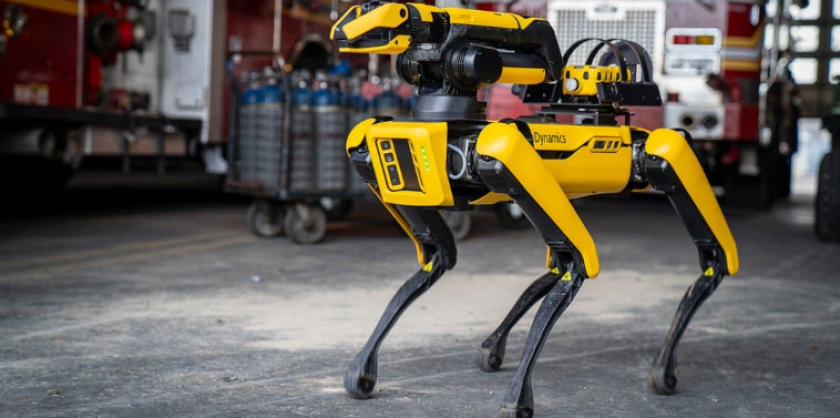
Robots offer potential for public safety, but state governments — working with a big name in robotics — are grappling with how to regulate them, especially as the prospect of weaponization raises urgent concerns.
-
A record-breaking alumni donation will be used to drive research in mobility, energy storage, AI and other growing fields by supporting doctoral fellowships, undergraduate student experiences and recruitment efforts.




Question of the Day
Editorial













