
-
 New guidelines on acceptable AI use at New York City Public Schools feature a “traffic light” framework of red (prohibited), yellow (proceed with caution) and green (approved) use cases.
 -
Rashida Richardson, who has a background in law and artificial intelligence, has joined Mayor Zohran Mamdani’s administration. There, she’ll assist the city’s data management office.
-
Teachers in the nation's largest school district have asked for more guardrails and advice for using AI in the classroom. The new rules are a first step toward a more comprehensive handbook to be issued at a later date.


More Stories
-
The demands of parcels coming and going, and other stressors at the curb, are prompting cities to design new approaches to managing these spaces. Often, they are turning to data and technology for support.
-
As federal workers return to the office, remote work continues in some large cities. In Houston, employees were called back onsite last month; and in Texas, the matter remains a topic of discussion.
-
New Yorkers may soon have a much better understanding of how the NYPD uses technology to conduct surveillance, track cellphones and maintain its facial recognition database.
-
New York City Public Schools have confirmed that at least four of their schools were affected by the breach, and they're working with PowerSchool to identify and directly notify students whose data was compromised.
-
A group of retired police chiefs is urging New York state elected officials to back a bill in Congress to preserve the AM radio in new cars as a simple means to get word to the public in emergencies.
-
A new report lays out the strategy of the city and the New York City Economic Development Corp. in leading on applied artificial intelligence. Goals include fostering a dynamic AI ecosystem.
-
Early data from the new congestion pricing project in Manhattan is showing increased vehicle speeds, a boon for bus riders and transit users, and an indication fees to enter the zone below 60th Street are having an impact.
-
New York-based URBAN-X is no more, after working with gov tech firms since 2016. But New York City’s Transit Tech Lab is looking for help to solve mass transit problems as congestion pricing kicks off in Manhattan.
-
The testing company Pearson will create and administer a digital version of the Specialized High School Admissions Test (SHSAT), following a similar transition by Advanced Placement and New York state tests.
-
The Specialized High Schools Admissions Test (SHSAT) for New York City schools may follow other standardized tests in moving online, but some parents are raising concerns about its fairness as well as its cost.
-
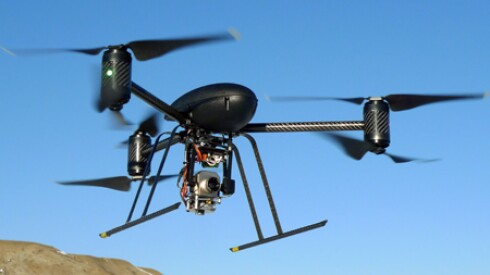
The Drone as First Responder program, piloted earlier this year, is now operational in five command areas of the New York City Police Department. The devices are intended to assist police in responding to shots-fired calls, robberies and other crimes.
-
New York City is using automated data feeds and streamlined processes to improve transparency. The innovative approach offers lessons for other governments seeking to avoid costly legal battles and promote public trust.
-
The discussion followed the release of New York City’s first progress report on artificial intelligence, one year after officials released an action plan on the technology. Most items in the plan have now been completed.
-
Firefighters from across the country will join federal Homeland Security Department officials at the FDNY Fire Academy for a deep dive on how to tackle deadly lithium-ion battery fires.
-
Delays with the website to apply for New York City public middle schools stemmed from an update by the Division of Instructional and Information Technology, which compromised other features and slowed down the system.
-
An executive order requiring telematics for NYC's fleet vehicles enabled better monitoring of driver habits like speed and seatbelt use, reducing crashes and improving safety citywide.
-
The brainchild of Jose Rolon, a citywide interagency coordinator for the Office of Emergency Management, the demo showed how drones could be used in two scenarios in the event of a coastal storm.
-
The Transit Tech Lab in New York City completed the “proof-of-concept” phase of its sixth annual competition to align technology solutions with some of the needs of the area’s various transit agencies.




Most Read

- Ed-Tech Nonprofit Acquires Mainstay for AI-Powered Student Support
- Pittsburgh’s New Tech-Focused Mayor Is Picking Up the Phone
- Pennsylvania House Approves Data Center Construction Rules
- Accessibility Deadline Prompts Changes in Kane County, Ill.
- Road Safety Firm Cambridge Mobile Telematics Raises $350M







