

An executive order from the governor of the Show Me State calls for the development of a strategic framework to advance AI technology and related infrastructure, addressing workforce development and data centers.
-
 The federal government’s now-defunct United States Digital Service has served as an inspiration for states that are increasingly putting human experience at the center of their tech projects.
 -
Tony Sauerhoff, who also previously served as state chief information security officer, was appointed interim executive director of the Texas Department of Information Resources and interim CIO.
-
The blockchain-based token, believed to be the first from a U.S. public entity, is for individual and institutional use. The executive director of the Wyoming Stable Token Commission is planning what comes next.
-
From the Rocky Mountains to the Gulf Coast, local governments are taking a strategic approach to sustain operational continuity in the face of IT department layoffs caused by budget constraints.




Most Read

Cybersecurity


From The Magazine

-
 People are less worried about AI taking humans’ jobs than they once were, but introducing bots to the public-sector workplace has brought new questions around integration, ethics and management.
 -
As governments at all levels continue to embrace new developments in artificial intelligence, cities are using automation for everything from reducing first responder paperwork to streamlined permitting.
-
Agencies report that critical IT positions remain hard to fill, but finding the right people takes more than job postings. States are expanding intern and apprentice programs to train and retain talent.


More News
-
National Grid is expected to install the devices for 121,000 customers in the city. They will enable people to track energy usage via a portal, and will immediately alert the utility to power outages.
-
San Jose is the latest city whose use of the cameras to snag criminal suspects, critics say, also threatens privacy and potentially runs afoul of laws barring access by out-of-state and federal agencies.
-
Now headed to the state Senate for consideration, House Bill 4141 would require all of Michigan's public and charter schools to adopt policies forbidding students from using cellphones during instructional time.
-
A lab at the University of Idaho will use a Department of Defense grant to develop machine learning models that might be able to analyze biometric data from military members and assess risk of PTSD.


-
The nonprofit InsideTrack will offer coaching and data-driven insights to three Nebraska colleges, aiming to find out what prompts students to drop out and convince more than 3,000 of them to finish their degrees.
-
A new report examines state work on AI and highlights actions government leaders can take to help drive AI adoption, from equipping the workforce to fostering research in support of the technology’s use.
-
The new Heartland AI Caucus unites six states under bipartisan leadership to shape regional AI strategies and foster innovation. Arkansas, Illinois, Louisiana, Ohio, Oklahoma and Tennessee are founding members.
-
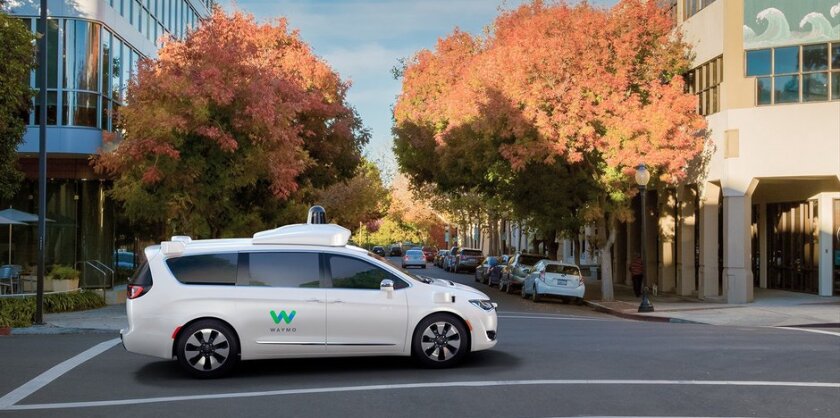
The autonomous vehicle provider has begun giving rides to a select California customer group along area freeways. Its self-driving vehicles will ferry passengers to San Jose Mineta International Airport.
-
The program will debut on a handful of streets in town limits. Drivers observed going 10 or more miles per hour over the speed limit will be cited. The technology will only capture images of speeding vehicles.
-
Starting this spring, students at Broken Arrow High School and Broken Arrow Virtual Academy in Oklahoma will be able to take an AI Foundations class, which will include lessons on coding and storytelling through data.




Question of the Day
Editorial














