

The state's digital wallet will be able to hold its Mobile Driver License and documents including vehicle registration. An update expected to arrive before summer will also alert holders to upcoming expirations.
-
 A recent Iran-linked cyber attack spurred discussions among state, local, tribal and territorial governments about the war in Iran, cybersecurity implications and practical ways to build their cyber resilience.
 -
The myAurora 311 Open Data Portal gives residents a detailed look at the city's non-emergency call traffic, service trends and response, and is part of a broader push to make city operations more transparent.
-
Plus, Maine is looking for partners for its middle-mile network, New Mexico has enacted a law establishing a broadband affordability program, fiber infrastructure expansion is continuing, and more.
-
The PowerDetails platform helps law enforcement agencies manage off-duty shifts and special event assignments. The deal marks the latest move in the public safety space for NEOGOV, which offers HR tech for government.


Most Read

Cybersecurity


From The Magazine
-
 From Pilot to Launch: What will it take to scale AI in government?

-
 As fears of an AI “bubble” persist, officials and gov tech suppliers are looking to move past pilots and deploy larger, more permanent projects that bring tangible benefits. But getting there is easier said than done.
 -
Artificial intelligence has been dominant for several years. But where has government taken it? More than a decade after the GT100's debut, companies doing business in the public sector are ready to prove their worth.
-
The boom of early Internet in the mid-1990s upended government IT. The rise of artificial intelligence isn't exactly the same, but it isn't completely different. What can we learn from 30 years ago?


More News
-
The California Cradle-to-Career Data System, already used to track education and career markers, will now connect with CalKIDS and community college data to connect students with scholarship opportunities.
-
After a swift negative response from residents, when police announced last month they would install automated license plate readers, the Village Board has canceled its camera contract.
-
With much construction finished on the project, which will use sensors and ramp meters to regulate eight miles of northbound traffic, a 90-day traffic count is underway ahead of its May debut.
-
While Norfolk State University in Virginia has traditionally covered energy costs for students in off-campus university housing, it will now levy a fine against apartments whose energy bills exceed $250.


-
Crime continues to drop this year in unincorporated Jefferson Parish, part of the greater New Orleans area. The sheriff’s office already fields roughly 30 drones, but is considering adding first responder drones.
-
Public libraries throughout the city’s southern suburbs — many chronically lacking the funding to make improvements themselves — are getting state grants for purposes including adding hardware or software.
-
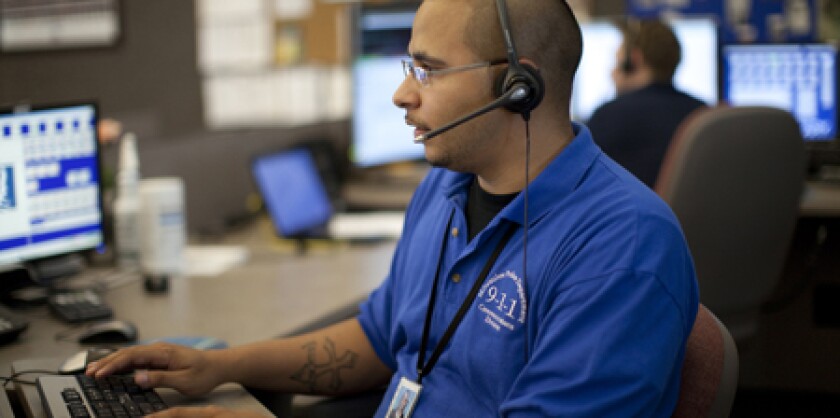
Emergency dispatch workers face a flood of calls that don’t require immediate assistance, or don’t even seem serious. Versaterm’s newest product aims to reduce that problem — and the stress on call takers — via software and AI.
-
Propelled by plans to ban phones in big-city districts such as New York and Los Angeles, some Philadelphia-area districts are trying new ways to do so — with parent groups often at the forefront.
-
Rockingham County Schools has announced the implementation of cutting-edge weapons detection systems across middle and high schools in the district, known as Opengate.
-
Student cellphone use is a hot topic of conversation across the state, and the state Board of Education has adopted guidance urging districts to develop policies to restrict student phone use.




Question of the Day
Editorial













