

The state will widen its use of an American Sign Language app across all agencies and buildings, in an effort to bring new levels of service for people who are hard of hearing.
-
 States have until April to meet the federal mandate established under the Americans with Disabilities Act, requiring all digital products be accessible for people with disabilities. Readiness levels vary.
 -
Jennifer Pittman-Leeper is GovRAMP’s new field CISO, which is an advisory role. Meanwhile, the nonprofit organization has now added North Carolina to the states that it provides cybersecurity guidance.
-
The boom of early Internet in the mid-1990s upended government IT. The rise of artificial intelligence isn't exactly the same, but it isn't completely different. What can we learn from 30 years ago?
-
Tekquell Watson has more than 25 years of military and federal experience, including senior technical and leadership roles. She will oversee technology operations across the consolidated city-county government.


Most Read

Cybersecurity


From The Magazine
-
 From Pilot to Launch: What will it take to scale AI in government?

-
 As fears of an AI “bubble” persist, officials and gov tech suppliers are looking to move past pilots and deploy larger, more permanent projects that bring tangible benefits. But getting there is easier said than done.
 -
Artificial intelligence has been dominant for several years. But where has government taken it? More than a decade after the GT100's debut, companies doing business in the public sector are ready to prove their worth.
-
The boom of early Internet in the mid-1990s upended government IT. The rise of artificial intelligence isn't exactly the same, but it isn't completely different. What can we learn from 30 years ago?


More News
-
Engineers and veterinarians at the University of California, Davis converted a metal barn into a research facility, where rows of infrared cameras record birds of prey in motion to help inform drone designs.
-
The National Center for Atmospheric Research (NCAR) Computational & Information Systems Lab, which operates NCAR Wyoming, provides computing resources, services and support to more than 500 universities.
-
Two proposed laws now under consideration have differing approaches to the technology campuses. One would have a state authority certify projects. The other would require new renewable energy sources.
-
Rain has long slowed the trains in the Northern California rail system. But a software upgrade is enabling gradual deceleration that is, so far, avoiding dramatic slowdowns in wet weather.


-
Through its new AI in Education Network, the American Institutes for Research aims to give educators and policymakers a clearer understanding of how AI tools are performing in real-world settings.
-
As states get ready for federal accessibility compliance, the National Association of State Chief Information Officers has released a step-by-step guide to ensure access is part of purchasing, too.
-
The nonprofit InsideTrack will offer coaching and data-driven insights to three Nebraska colleges, aiming to find out what prompts students to drop out and convince more than 3,000 of them to finish their degrees.
-
A new report examines state work on AI and highlights actions government leaders can take to help drive AI adoption, from equipping the workforce to fostering research in support of the technology’s use.
-
The new Heartland AI Caucus unites six states under bipartisan leadership to shape regional AI strategies and foster innovation. Arkansas, Illinois, Louisiana, Ohio, Oklahoma and Tennessee are founding members.
-
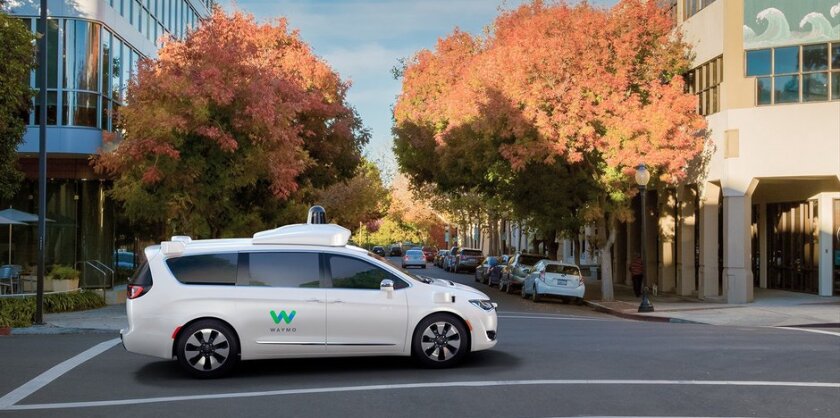
The autonomous vehicle provider has begun giving rides to a select California customer group along area freeways. Its self-driving vehicles will ferry passengers to San Jose Mineta International Airport.



Editorial













