

Public agencies use software from Libera for vocational rehabilitation. CiviCore, once part of Neon One, has government clients that include courts, schools and health and human services departments.
-
 With its longtime federal support now withdrawn, one of the country’s largest public-sector cybersecurity support organizations has moved to a new paid model where states handle the bill for its services.
 -
Plus, New York has reopened applications for grants through its ConnectALL program, New Mexico celebrated progress on connectivity expansion, fiber networks continue expanding to new locations, and more.
-
Responder MAX will focus on marketing, communications, recruitment and other areas. First Arriving, which has worked with some 1,300 agencies, will keep involved with its "real-time information platform."
-
An executive order from the governor of the Show Me State calls for the development of a strategic framework to advance AI technology and related infrastructure, addressing workforce development and data centers.


Most Read

Cybersecurity


From The Magazine

-
 People are less worried about AI taking humans’ jobs than they once were, but introducing bots to the public-sector workplace has brought new questions around integration, ethics and management.
 -
As governments at all levels continue to embrace new developments in artificial intelligence, cities are using automation for everything from reducing first responder paperwork to streamlined permitting.
-
Agencies report that critical IT positions remain hard to fill, but finding the right people takes more than job postings. States are expanding intern and apprentice programs to train and retain talent.


More News
-
JB Holston, the University of Denver's former dean of engineering and computer science, praised Colorado's quantum tech hub and said he hopes to promote the state's major research universities and technical colleges.
-
Hiring a workforce development coordinator with deep industry knowledge and connections, and making it easier for CTE instructors to get licensed, helped an Arizona district grow its network of business partnerships.
-
In the two years since the state released guidance for localities interested in speed or red-light cameras, fewer than 10 percent of its municipalities have submitted and won approval of plans.
-
The state has been trying to revamp a pair of aging IT systems for some time, with one being related to worker's compensation and the other being the state’s financial systems.


-
The nonprofit InsideTrack will offer coaching and data-driven insights to three Nebraska colleges, aiming to find out what prompts students to drop out and convince more than 3,000 of them to finish their degrees.
-
A new report examines state work on AI and highlights actions government leaders can take to help drive AI adoption, from equipping the workforce to fostering research in support of the technology’s use.
-
The new Heartland AI Caucus unites six states under bipartisan leadership to shape regional AI strategies and foster innovation. Arkansas, Illinois, Louisiana, Ohio, Oklahoma and Tennessee are founding members.
-
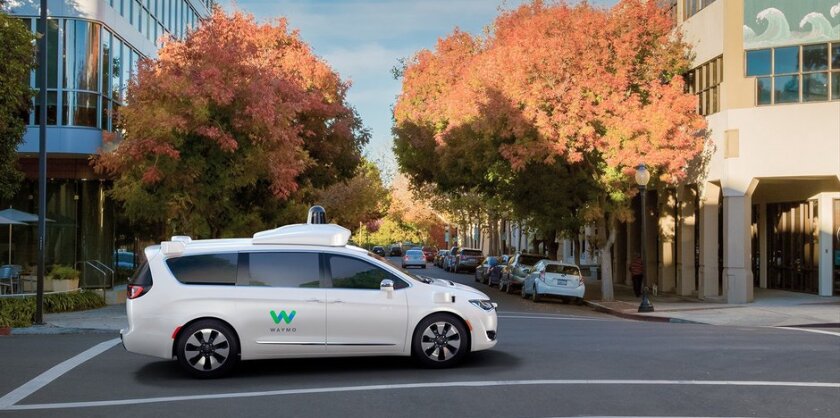
The autonomous vehicle provider has begun giving rides to a select California customer group along area freeways. Its self-driving vehicles will ferry passengers to San Jose Mineta International Airport.
-
The program will debut on a handful of streets in town limits. Drivers observed going 10 or more miles per hour over the speed limit will be cited. The technology will only capture images of speeding vehicles.
-
Starting this spring, students at Broken Arrow High School and Broken Arrow Virtual Academy in Oklahoma will be able to take an AI Foundations class, which will include lessons on coding and storytelling through data.




Question of the Day
Editorial














